Tomato Cages vs Stakes: How to Support Tomato Plants
On this page
Cages suit determinate and compact tomatoes and need little tying, while stakes and trellises suit tall indeterminate varieties pruned to one or two stems. The best way to support tomato plants is to match the support to how the plant grows, install it at planting time and make sure it is strong enough for a plant loaded with fruit.
Why support tomatoes?
Tomato stems are weak for the weight they carry. A plant with a dozen heavy tomatoes will flop or snap without help. Supports lift fruit off the ground (reducing rot and pests), improve airflow so leaves dry faster, make harvests easier and keep rows tidy. For more tomato guides, visit our tomato plants hub.
Tomato cages
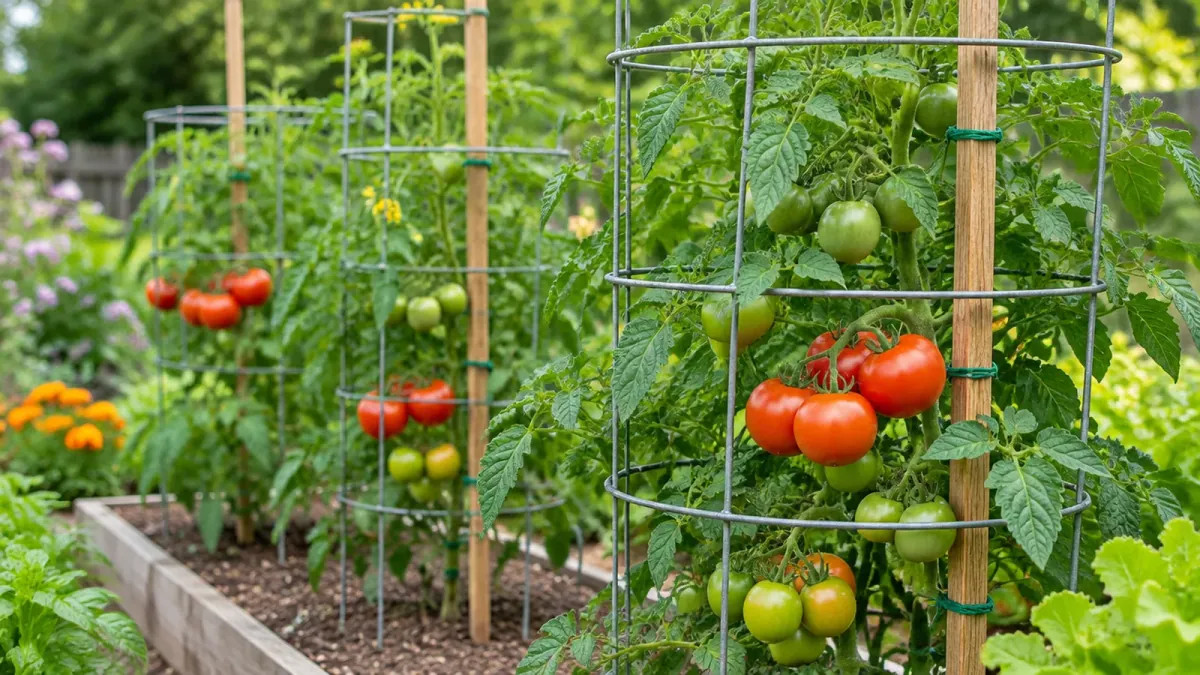
A cage is a ring of wire that surrounds the plant. Stems grow up through the openings, and you rarely need to tie anything.
Pros: little tying; plants support themselves; good for bushy, determinate types.
Cons: cheap cone-shaped cages are too small and flimsy for large plants and often tip over; plants can be hard to prune and harvest inside narrow cages; storage takes room.
The best cages are tall (5 feet or more), wide (at least 18 inches across) and made of heavy-gauge wire, often homemade from concrete reinforcing mesh or cattle panel. Anchor with a stake.
Tomato stakes
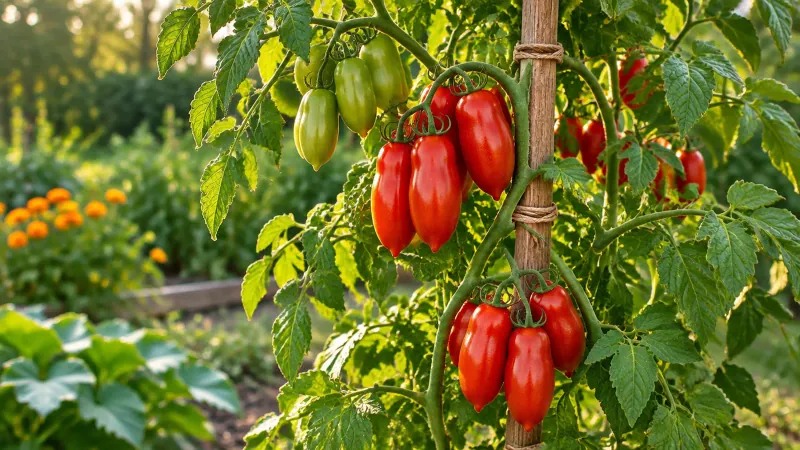
A stake is a single post beside the plant. You tie the main stem to it as it grows, and you prune suckers so the plant stays on one or two stems.
Pros: cheap; space-efficient (plants can be 18 inches apart); easy to see and reach fruit; works well with pruning.
Cons: needs regular tying and sucker removal every week or so; plants can snap if neglected; stakes must be tall and strong.
For help with pruning, see our guide to how to prune tomato plants.
Trellises and string
A trellis is a frame or panel of netting, wire or cattle panel. A string system hangs twine from an overhead wire, and you twist the plant around it as it grows. These are common in greenhouses and for rows of indeterminate plants.
Pros: strong; handles tall plants; easy to harvest; good airflow.
Cons: needs a solid frame; setup time and cost.
The Florida weave
For a row, set sturdy stakes every two or three plants, then weave twine back and forth along the row. Each line holds the plants upright like a fence. Add a new line every 8 to 10 inches of growth. It is cheap, quick and works for both determinate and indeterminate types, though it suits less-pruned plants.
Comparison
| Method | Best for | Cost | Upkeep | Space needed |
|---|---|---|---|---|
| Wire cage | Determinate, compact plants | Low to moderate | Low | Wide (24–36 in) |
| Single stake | Pruned indeterminate plants | Low | High (tying, pruning) | Narrow (18–24 in) |
| Trellis or cattle panel | Indeterminate plants, rows | Moderate | Moderate | Narrow |
| String and overhead wire | Greenhouse, tall rows | Moderate | Moderate | Narrow |
| Florida weave | Rows of plants | Low | Moderate | Row spacing |
| Teepee of stakes | Small gardens, 1–2 plants | Low | Moderate | Compact |
Match support to plant type
Understanding growth habit helps. Our guide to determinate vs indeterminate tomatoes explains the difference.
| Plant type | Best support |
|---|---|
| Determinate (bush) | Sturdy cage or short stakes |
| Indeterminate (vining) | Tall stakes, trellis, strong tall cage |
| Dwarf and patio types | Small cage or a short stake in the pot |
| Large heirlooms and beefsteaks | Heavy-duty cage or trellis; fruit is heavy |
| Cherry tomatoes | Trellis or tall cage; vigorous growers |
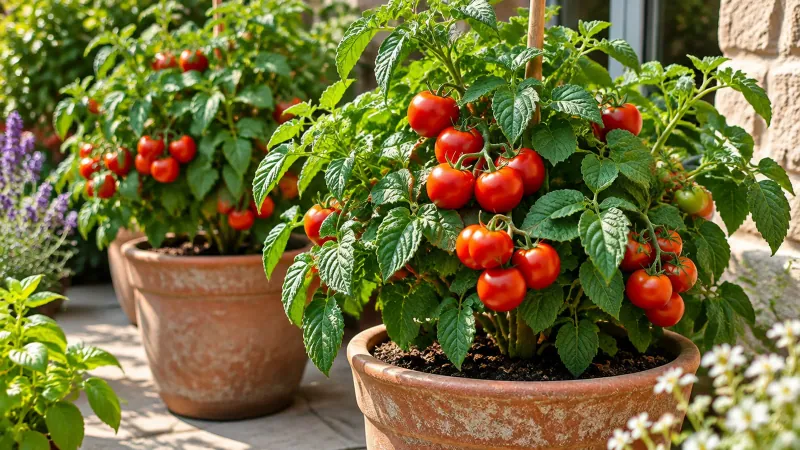
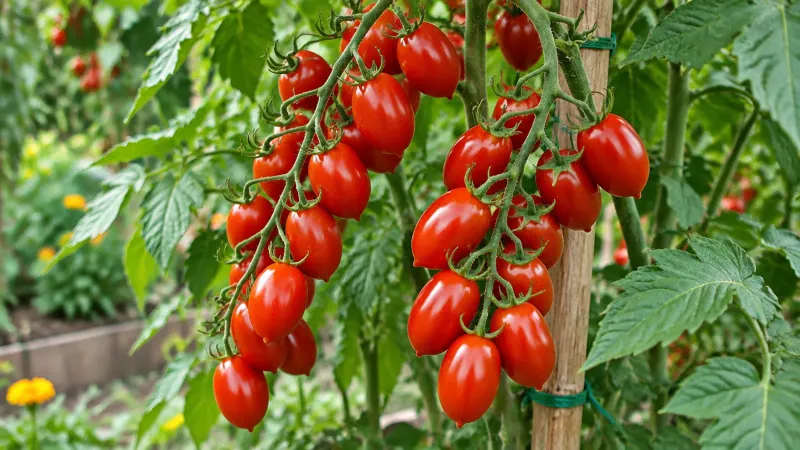
For container plants, see our guide to patio tomato plants. Paste tomatoes also differ in habit: our comparison of Roma vs San Marzano shows which needs a short cage and which needs a tall stake.
How to tie tomatoes
- Use soft ties: cloth strips, tomato clips or soft twine. Avoid thin wire or fishing line, which cuts stems.
- Tie loosely in a figure eight, with the knot on the stake and a loop around the stem.
- Tie below a leaf or flower cluster, which gives extra support.
- Add a tie every 8 to 12 inches as the plant grows.
- Check ties every week as stems thicken.
Material choices
| Material | Pros | Cons |
|---|---|---|
| Hardwood stakes | Strong, natural | Can rot over time |
| Metal T-posts | Very strong, reusable | Hot in sun; need clips |
| Bamboo | Cheap, light | Can snap under heavy plants unless thick |
| Rebar | Strong | Heavy, can rust |
| Cattle panel | Strong, long-lived | Needs posts; awkward to store |
| Plastic-coated wire cages | Lasts years | Higher cost |
Mistakes to avoid
- Installing supports after the plants are large.
- Using small, cheap cone cages for big indeterminate varieties.
- Tying too tight, which girdles stems.
- Forgetting to prune stake-trained plants.
- Placing supports too close to the plant, damaging roots.
- Setting stakes too short.
Support and spacing
Support choice affects spacing. Single-stake plants can go 18 inches apart, while caged plants need 24 to 36 inches. See our guide to tomato plant spacing for details.
Cleaning and storing supports
Supports can carry disease spores from one season to the next. At the end of the season, remove old plant debris and scrub cages and stakes with a solution of 1 part bleach to 9 parts water, or wash with soap and water, then let them dry. Store them in a dry place so metal doesn’t rust and wood doesn’t rot.
Frequently asked questions
Are tomato cages or stakes better?
Neither wins everywhere. Cages suit determinate and compact plants and need little tying. Stakes and trellises suit tall indeterminate plants pruned to one or two stems, and they save space, but require regular tying and pruning. For big vining varieties, a strong stake, trellis or tall heavy-duty cage works better than the small cone cages sold cheaply.
When should I put up tomato supports?
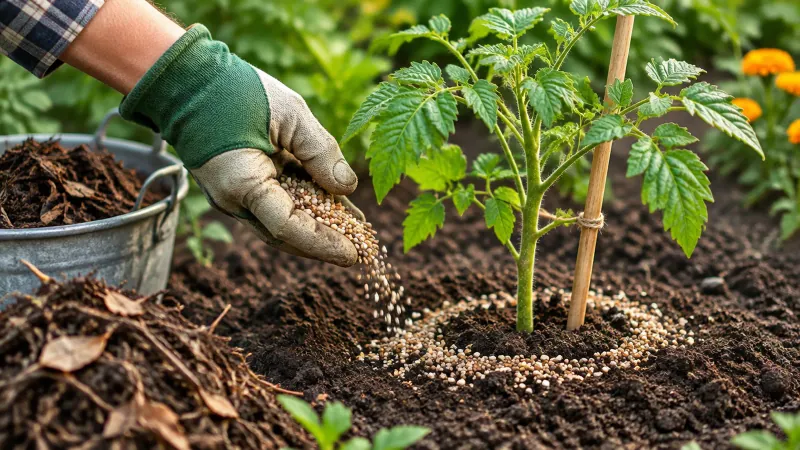
Install supports at planting time. Pushing stakes or cages in later can damage roots and plants may already have flopped. Drive stakes 8 to 12 inches into the soil beside the plant, or set the cage over the transplant. Early support also trains stems upward from the start, which makes tying and pruning easier.
How tall should tomato stakes be?
For indeterminate varieties, use stakes at least 6 to 8 feet long, with 1 to 2 feet driven into the ground, so about 5 to 6 feet stand above soil. Determinate varieties usually need only 3- to 4-foot stakes or cages. Choose sturdy materials such as hardwood, metal or heavy bamboo, since a loaded plant is heavy.
Can tomatoes grow without support?
Yes, but vines sprawl on the ground, fruit touches soil and rots more easily, and plants take up lots of space. Compact determinate and dwarf varieties can sometimes manage with little support if mulched well. Most gardeners find that supporting plants gives cleaner fruit, easier harvests and better airflow against disease.
What is the Florida weave for tomatoes?
The Florida weave is a cheap method for rows of tomatoes. Posts go in every two or three plants, and twine is woven back and forth around the plants, sandwiching stems between lines. You add a new line of twine every 8 to 10 inches of growth. It keeps plants upright and tidy with minimal materials.