How Often to Water Tomato Plants
On this page
Tomato plants in the ground need about 1 to 2 inches of water a week, ideally in one or two deep soakings at the base, and more in hot, dry or windy weather. Tomatoes in pots may need water every day in summer. Check the soil two inches down, water in the morning, and keep moisture steady to prevent cracking and blossom end rot.
Why watering matters so much for tomatoes
Tomato fruit is mostly water, and plants are sensitive to swings in moisture. Uneven watering causes split fruit, blossom end rot and stress, while steady moisture gives bigger, tastier tomatoes. The aim is deep, regular watering rather than a little every day. For more tomato guides, visit our tomato plants hub.
How much water tomatoes need
| Situation | Typical need |
|---|---|
| Newly planted transplants | Water every 2–3 days for the first couple of weeks |
| Established plants in the ground | 1–2 in a week (about 0.6–1.2 gallons per square foot) |
| Hot, windy or dry weather | Up to 3 in a week |
| Sandy soil | More often, less per watering |
| Clay soil | Less often; watch drainage |
| Containers | Daily in summer; sometimes twice a day |
| Raised beds | Dry faster than ground soil; check often |
One inch of water over a square foot is roughly 0.6 gallons. A rain gauge or straight-sided tin tells you how much rain has fallen.
How to tell when to water
- Finger test: push a finger two inches into the soil. Dry means water.
- Plant signs: wilting in the morning means thirst; wilting only in the afternoon heat often recovers by evening.
- Pot weight: lift a container: a light pot is dry.
- Soil surface: cracked, pulled-away soil is dry.
- A moisture meter helps but can be inaccurate.
How to water tomatoes properly
- Water at the base, not over the leaves. Wet foliage encourages fungal disease.
- Water deeply. Soak the root zone so water reaches 6 to 8 inches down, which encourages deep roots.
- Water in the morning, so plants have moisture for the day.
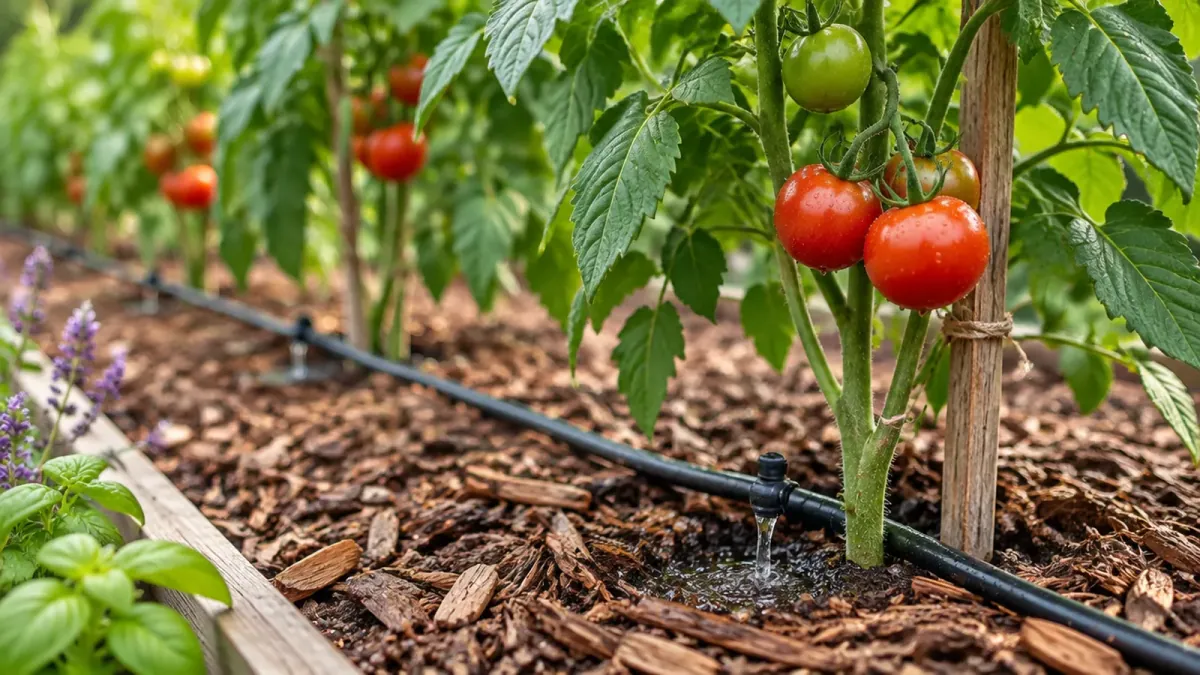
- Use drip lines or soaker hoses for steady, efficient delivery.
- Water slowly so it soaks in rather than runs off.
- Mulch with 2 to 3 inches of straw, shredded leaves or grass clippings to hold moisture and prevent soil splash.
Watering by growth stage
| Stage | Watering approach |
|---|---|
| Seedlings | Keep evenly moist, not soggy |
| Just transplanted | Water well at planting, then every 2–3 days |
| Established vegetative growth | Deep watering once or twice a week |
| Flowering and fruit set | Steady moisture; avoid drought stress |
| Ripening | Keep even; slightly less water can concentrate flavor, but don’t let soil dry out |
| After heavy rain | Skip watering; check drainage |
Watering tomatoes in containers
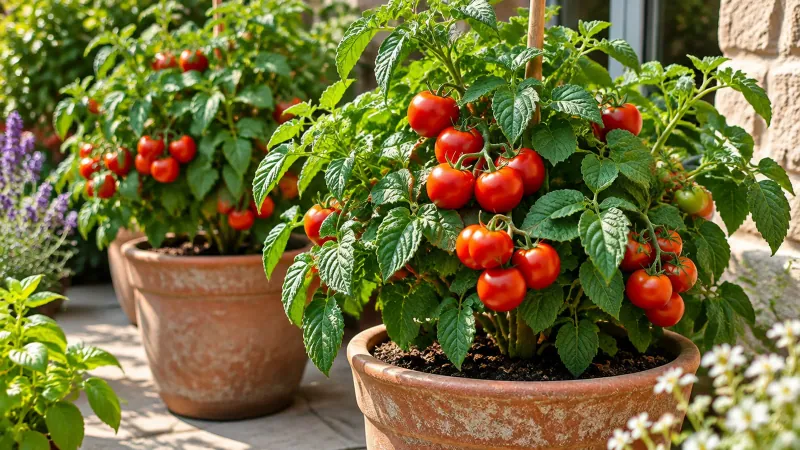
Pots dry out fast. Water whenever the top inch or two of mix is dry, slowly, until it flows from the drainage holes. Large containers hold more water, and mulch, self-watering planters and drip systems help. In hot summers, plan for daily watering. See our guide on how to grow tomatoes in pots for container tips.
Signs of overwatering and underwatering
| Sign | Overwatering | Underwatering |
|---|---|---|
| Leaves | Yellow, especially lower leaves; limp | Curling, dry, crisp |
| Wilting | Wilts in wet soil | Wilts in dry soil; recovers after watering |
| Fruit | Splitting; watery flavor | Small; blossom end rot |
| Soil | Soggy, sour smell | Dry, cracked |
| Roots | Dark, soft, rotting | Dry, brittle |
Yellow leaves have several possible causes; see our guide to yellow leaves on tomato plants.
Common watering problems
Split or cracked fruit
Caused by a sudden flush of water after dry weather. Keep moisture steady, mulch and harvest ripe fruit before heavy rain.
Blossom end rot
A dark, sunken patch on the bottom of the fruit, usually linked to uneven watering. Steady moisture is the main fix.
Wilting on hot afternoons
Often normal heat stress. If plants recover in the evening and the soil is moist, don’t add more water.
Fungal leaf diseases
Wet leaves encourage them. Water at the base, space plants well and prune lower leaves.
Watering and feeding go together
Plants can only take up nutrients from moist soil, and frequent watering washes nutrients out of pots. Feed regularly through the season; see our guide to the best fertilizer for tomato plants.
Drip irrigation and mulch
A simple drip line with a timer delivers steady moisture and saves time. Lay it under mulch at the base of plants. Mulch cuts evaporation by a large amount, keeps roots cooler and reduces weeds. In a vegetable garden, 2 to 3 inches of straw or shredded leaves works well. For other options, see our guide to types of mulch.
Water quality
Most tap water is fine for tomatoes. Rainwater is excellent and free: collect it in barrels from a downspout. Avoid water from salt-based softeners, which can harm plants. If you have well water with very high mineral levels, a soil test will show whether salts are building up.
Frequently asked questions
How often should tomato plants be watered?
Tomato plants in the ground generally need about 1 to 2 inches of water a week, from rain or watering, delivered in one or two deep soakings rather than daily sprinkles. In hot, dry or windy weather, they may need more. Tomatoes in pots may need water every day, sometimes twice a day, in midsummer.
Is it better to water tomatoes in the morning or evening?
Morning is best. Plants have water to cope with the day’s heat, and any splashes on leaves dry quickly in the sun, which reduces disease. Evening watering is fine if you water only at the base, but damp foliage overnight encourages fungal problems. Avoid watering in the heat of the day, when much evaporates.
How do I know if my tomato plants need water?
Push a finger two inches into the soil near the plant. If it feels dry, water. Plants that wilt in the afternoon but recover by evening may just be heat-stressed, while plants wilted in the morning are thirsty. Curling leaves, cracked soil and a light pot all point to thirst. Don’t water just because leaves droop in heat.
What happens if you overwater tomatoes?
Overwatering suffocates roots, causing yellow leaves, wilting despite wet soil, root rot and split fruit. It also dilutes flavor and encourages fungal diseases. Signs include soil that stays soggy, a sour smell and yellowing lower leaves. Let the soil dry to a couple of inches deep before watering, and make sure containers drain.
How much water do tomatoes in pots need?
Container tomatoes need water whenever the top inch or two of mix is dry, which may be daily in summer. Water slowly until it flows from the drainage holes. Large pots, mulch and self-watering containers help hold moisture. Consistent watering matters most, because swings between dry and soaked cause split fruit and blossom end rot.