How to Grow Tomatoes in Pots and Containers
On this page
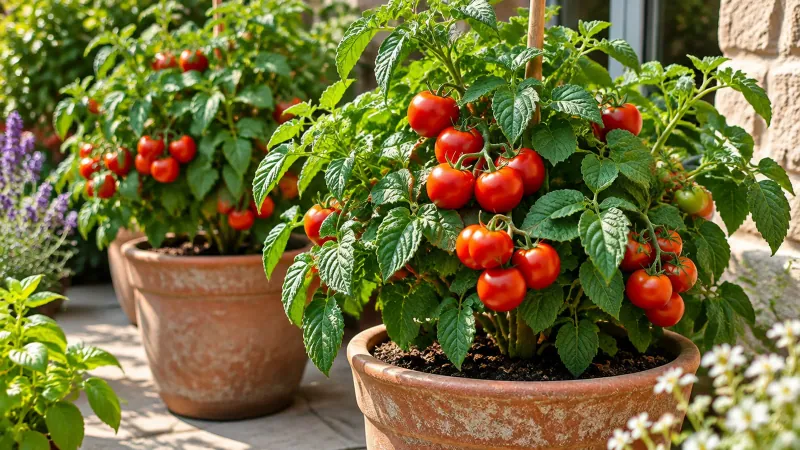
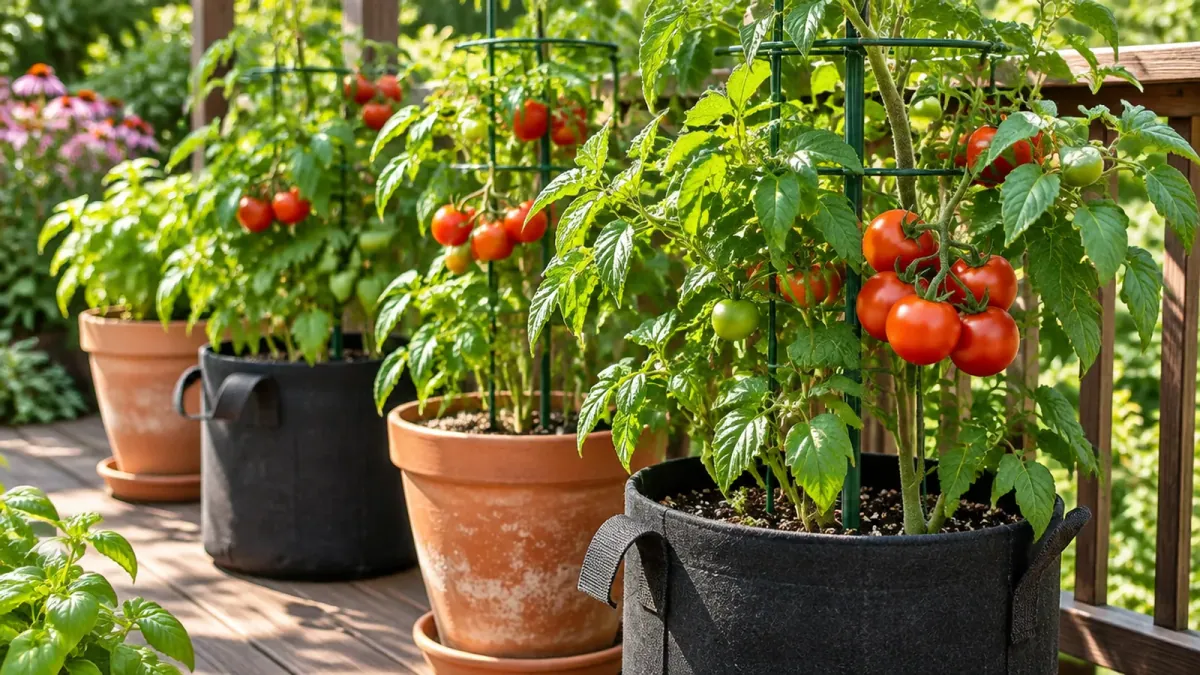
To grow tomatoes in pots, choose a container big enough for the variety (at least 5 gallons for compact types and 15 to 20 gallons for tall vining ones), fill it with quality potting mix, and plant deep in the sunniest spot you have. Add a stake or cage at planting, water whenever the top inch of mix is dry, and feed regularly once the first fruits set.
Why grow tomatoes in containers?
Containers let you grow tomatoes almost anywhere with enough sun: a patio, a deck, a balcony or a driveway. You control the growing mix, you avoid soil-borne diseases in the garden, and you can move pots into the sun or out of harsh weather. The trade-off is that pots dry out and run short of nutrients much faster than garden beds, so watering and feeding need more attention.
For more variety profiles and tomato guides, visit our tomato plants hub.
Step 1: Choose the right variety
The variety decides the size of pot and support you need.
- Determinate and patio varieties stay compact, usually 2 to 4 feet, and are the easiest choice for pots. Our guide to patio tomato plants lists the best compact varieties.
- Dwarf and micro types stay under about 2 feet and suit small pots and windowsills.
- Indeterminate varieties keep growing all season and can reach 6 feet or more. They grow well in containers only if you give them large pots and tall supports.
- Cherry tomatoes are reliable and productive in pots. See our list of cherry tomato varieties.
Not sure which type you have? Our guide to determinate vs indeterminate tomatoes explains the difference.
Step 2: Choose the right pot
| Tomato type | Minimum container | Better |
|---|---|---|
| Micro and dwarf types | 1–3 gallons | 5 gallons |
| Compact determinate and patio types | 5 gallons | 10 gallons |
| Cherry tomatoes (indeterminate) | 10 gallons | 15–20 gallons |
| Large indeterminate slicers and paste types | 15 gallons | 20 gallons or more |
Bigger is almost always better: a larger volume of potting mix holds more water and nutrients, buffers temperature swings and supports a bigger plant.
Container types
- Plastic pots are light, cheap and hold moisture well. Avoid black pots in hot, full sun, which can overheat roots.
- Fabric grow bags breathe, drain freely and keep roots cooler, but dry out faster.
- Glazed ceramic pots look good and hold moisture but are heavy.
- Terracotta dries out quickly; use only very large terracotta pots for tomatoes.
- Self-watering containers have a reservoir under the mix and cut watering dramatically. They are excellent for tomatoes on hot patios.
- Buckets and tubs work if you drill several drainage holes in the base.
Every container needs drainage holes.
Step 3: Use the right potting mix
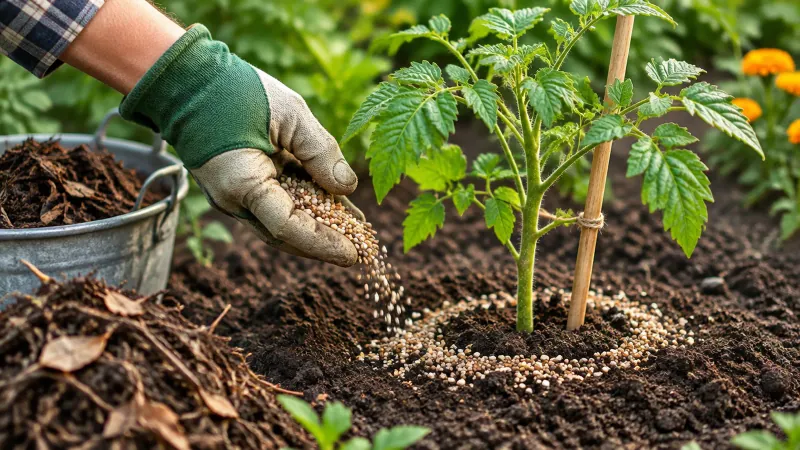
Fill containers with a quality potting mix, ideally one containing compost. Garden soil compacts in pots, drains poorly and may carry diseases. Mixing in a slow-release fertilizer at planting time gives plants a steady supply of nutrients for the first several weeks.
Step 4: Plant deep
- Plant after your last frost, once nights stay above about 50°F.
- Fill the pot to a few inches below the rim.
- Remove the lower leaves and plant the seedling deep, burying the stem up to the first set of leaves. Tomatoes grow roots along buried stems, which makes a sturdier plant.
- Grow one tomato plant per pot.
- Water thoroughly and add a layer of mulch, such as straw or shredded bark, to slow evaporation.
Step 5: Add support at planting time
Push in a cage or stake when you plant, not later, to avoid damaging roots.
- Compact types: a small cage or 3- to 4-foot stake.
- Indeterminate types: a tall, sturdy cage or a 6-foot stake, or a trellis behind the pot. Very tall plants in pots can be top-heavy, so place them where they are sheltered from strong wind.
Step 6: Find the sunniest spot
Tomatoes need at least six to eight hours of direct sun. South- and west-facing patios and balconies are ideal. In very hot climates, some afternoon shade helps, and shading the sides of the pot keeps roots cooler. Reflected heat from walls and paving can push temperatures high enough to stop fruit setting.
Step 7: Water consistently
Watering is the most important part of growing tomatoes in containers.
- Check every day in summer by pushing a finger into the mix.
- Water when the top inch is dry, slowly, until water drains from the bottom.
- Expect daily watering, sometimes twice a day, for large plants in hot, windy weather.
- Avoid boom and bust. Letting pots dry out and then flooding them causes split fruit and blossom end rot.
- Water the soil, not the leaves, ideally in the morning.
Our guide on how often to water tomato plants covers garden and container watering in more detail.
Step 8: Feed regularly
Frequent watering washes nutrients out of potting mix, so container tomatoes need more feeding than garden plants. A good routine is a slow-release fertilizer mixed in at planting, then a liquid tomato fertilizer every one to two weeks once the first fruits set, following the label. Avoid high-nitrogen feeds, which produce leaves instead of fruit. Our guide to the best fertilizer for tomato plants explains what to use and when.
Step 9: Prune and pollinate
- Determinate types: don’t remove side shoots, since they carry the crop. Just remove yellowing leaves near the base.
- Indeterminate types: remove most side shoots to keep plants to one or two main stems, which suits the limited space in a pot.
- Pollination: tomato flowers self-pollinate but need movement. On sheltered balconies, gently shake plants or tap flower clusters every few days while they are in bloom.
Step 10: Harvest
Pick tomatoes when they are fully colored and slightly soft. Containers can be moved into a sheltered spot on cold fall nights to extend the season. Before the first frost, pick any full-sized green fruit and ripen it indoors at room temperature.
Common container tomato problems
| Problem | Likely cause | Fix |
|---|---|---|
| Wilting in the afternoon | Pot drying out; heat | Water more often; move to a larger pot; shade the pot |
| Split fruit | Uneven watering | Water consistently; mulch the surface |
| Dark patch on the base of fruit | Blossom end rot from uneven watering | Keep moisture steady |
| Yellow lower leaves | Nutrients washed out | Feed regularly once fruiting |
| Flowers but no fruit | Heat, cold nights or no pollination | Shake plants; wait for milder weather |
| Plant falls over | Top-heavy plant, weak support | Use a bigger pot and stronger cage or stake |
Growing tomatoes on balconies
Balconies add wind, weight limits and sometimes reflected heat. Use lightweight pots and mix, keep heavy containers near the wall, and secure supports well. Our balcony gardening ideas for beginners cover these points, and our list of the best vegetables to grow in containers suggests crops to grow alongside your tomatoes.
At the end of the season
Remove spent plants and roots. Don’t replant tomatoes in the same potting mix next year, since diseases can carry over. Refresh old mix with compost and use it for a different crop, or spread it over garden beds. Clean pots with hot, soapy water before reusing them.
Frequently asked questions
How often should you water tomatoes in pots?
Check potted tomatoes every day in summer and water whenever the top inch of potting mix feels dry. In hot, sunny or windy weather, a mature plant in a pot may need watering once or even twice a day. Water slowly until it drains from the bottom, so the whole root ball is wet. Consistent watering prevents split fruit and blossom end rot.
Can you grow tomatoes in 5-gallon buckets?
Yes. A 5-gallon bucket suits one compact determinate or patio tomato, as long as you drill several drainage holes in the bottom and fill it with potting mix. It is on the small side for large indeterminate varieties, which do better in 15 to 20 gallons. Food-grade buckets are a sensible choice, and light-colored buckets stay cooler in sun.
Do tomatoes grow better in pots or in the ground?
Tomatoes usually grow bigger and need less watering in rich garden soil, because their roots can spread widely. Pots have other advantages: you control the soil, you can put plants in the sunniest spot or on a patio or balcony, and you avoid soil-borne diseases. With a big enough container and steady watering, pot-grown tomatoes can be very productive.
Can you reuse potting soil for tomatoes?
You can reuse it for other crops, but it is better not to grow tomatoes in the same potting mix two years running, because diseases such as early blight can carry over. Old mix is also depleted of nutrients and often compacted. If you reuse it, refresh it with plenty of compost and slow-release fertilizer and use it for a different crop family, such as lettuce or beans.
Why are the leaves on my potted tomato turning yellow?
In containers, yellowing lower leaves are most often caused by a lack of nutrients, because frequent watering washes them out of the potting mix. Overwatering in pots without good drainage, very hot or cold weather, and leaf diseases are other common causes. Feed regularly once fruit sets, check drainage, and remove any spotted leaves promptly.