Best Vegetables to Grow in Containers
On this page
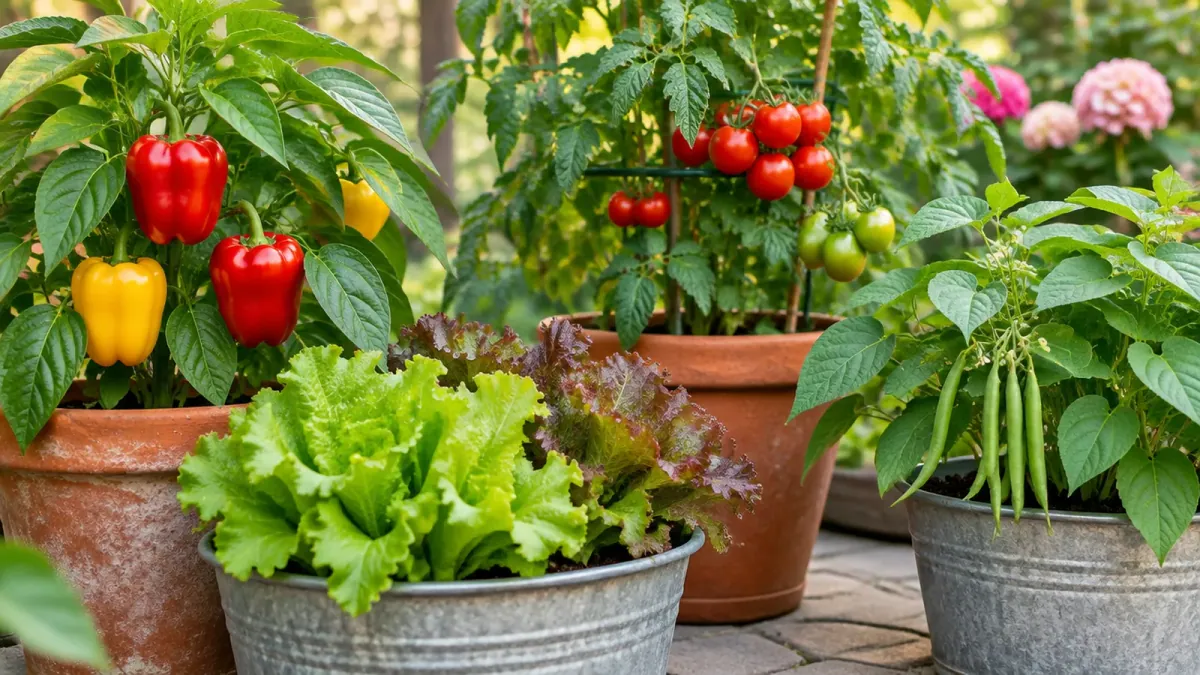
The best vegetables to grow in containers are tomatoes, peppers, lettuce, radishes, bush beans, cucumbers, kale, chard, carrots, green onions and herbs. Use pots with drainage holes, quality potting mix and containers large enough for each crop: 6 to 8 inches deep for greens, 10 to 12 for peppers and beans, and 5 to 10 gallons or more for tomatoes and squash.
Why grow vegetables in containers?
Containers let you grow food on a balcony, patio, deck or driveway, put crops in the sunniest spot, and control the soil. They suit renters, small spaces and anyone with poor ground. The trade-offs: pots dry out fast and need more feeding. For more small-space growing ideas, browse our vegetables and small-space gardening hub.
Containers and sizes
| Crop type | Minimum pot | Examples |
|---|---|---|
| Shallow-rooted greens | 6–8 in deep; window box | Lettuce, spinach, arugula, radish, herbs |
| Medium | 10–12 in deep, 3–5 gal | Peppers, bush beans, carrots, kale, chard, beets |
| Large | 5–10+ gal | Tomatoes, eggplant, cucumbers, zucchini |
| Very large | 15–20 gal | Indeterminate tomatoes, summer squash on trellis |
Use pots with drainage holes. Fabric grow bags, plastic pots, glazed ceramic, wooden boxes and self-watering planters all work. Dark pots heat up in sun, so shade the sides in hot climates.
16 vegetables for containers
| Vegetable | Pot size | Varieties to look for | Notes |
|---|---|---|---|
| Tomatoes | 5–20 gal | Patio, dwarf and cherry types | Support needed; see how to grow tomatoes in pots |
| Peppers | 3–5 gal | Compact bell and chili | Warm and sunny |
| Lettuce | 6–8 in deep | Leaf and baby types | Cut-and-come-again |
| Radishes | 6 in deep | Any | Ready in weeks |
| Bush beans | 3–5 gal | Bush varieties | Productive and easy |
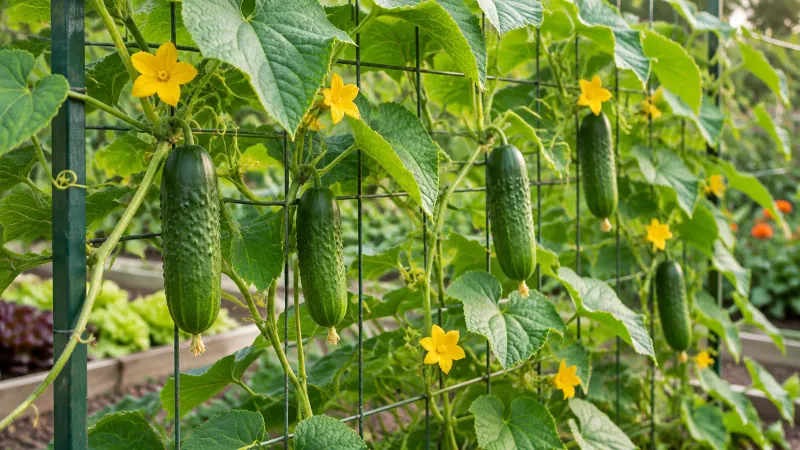
| Cucumbers | 5+ gal | Bush or compact vining | Trellis for vining types |
| Kale | 3–5 gal | Dwarf and baby varieties | Hardy |
| Swiss chard | 3–5 gal | Any | Heat tolerant |
| Carrots | 10–12 in deep | Short, round types | Loose mix |
| Green onions | 6–8 in deep | Bunching onions | Grow in a window box |
| Eggplant | 5+ gal | Compact and Asian types | Needs warmth |
| Zucchini | 10+ gal | Bush varieties | One per pot |
| Spinach | 6–8 in deep | Any | Cool season |
| Beets | 8–10 in deep | Round types | Eat roots and greens |
| Herbs | 6–12 in | Basil, chives, parsley, thyme | See best herbs to grow indoors |
| Strawberries | 8–10 in deep | Everbearing | Hanging baskets work |
How to start
- Choose containers with drainage holes.
- Fill with potting mix, leaving 1 to 2 inches below the rim.
- Mix in slow-release fertilizer according to the label.
- Plant at the right depth. Follow the packet.
- Water thoroughly after planting.
- Add support at planting for tomatoes, cucumbers and beans.
- Mulch the surface to slow evaporation.
Watering and feeding
- Water daily in summer, whenever the top inch is dry, until water drains from the bottom.
- Self-watering containers reduce effort and give more even moisture.
- Feed regularly: frequent watering washes nutrients out. Use a liquid feed every one to two weeks for hungry crops such as tomatoes, peppers and squash. Our guide to the best fertilizer for tomato plants explains feeding in more detail.
- Mulch to cut watering.
Where to place containers
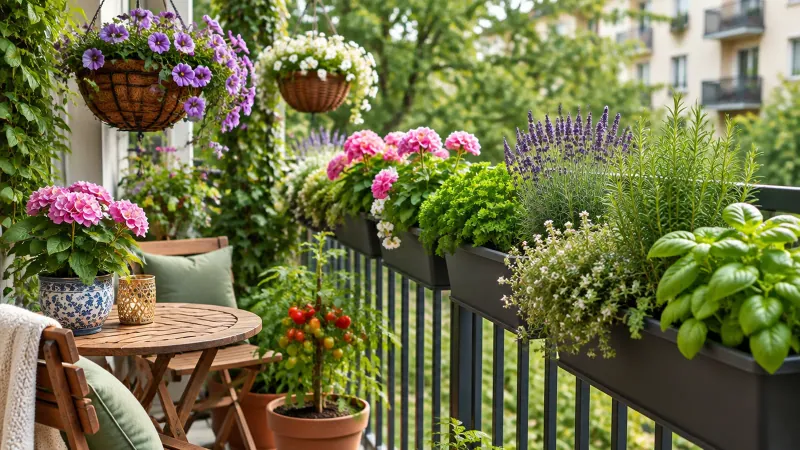
Place containers where they will get the light they need and shelter from strong wind. On balconies, mind weight and wind; see our balcony gardening ideas for beginners. Group pots together so they shade each other’s roots, and put the tallest on the north side.
Succession and companion ideas
- Mix a tall crop with a low crop in a large pot: a tomato with basil or lettuce at the base.
- Sow lettuce and radish in the shade of a tomato or bean trellis.
- Replant a pot with a quick fall crop after summer crops finish.
See our companion planting chart for combinations.
Potting mix recipes for vegetables
| Mix | Recipe | Best for |
|---|---|---|
| All-purpose | Bagged potting mix, plus a handful of compost per pot | Most vegetables |
| Lighter, free-draining | 2 parts potting mix, 1 part perlite | Carrots, herbs |
| Rich, moisture-holding | 2 parts potting mix, 1 part compost, 1 part coir | Tomatoes, squash, cucumbers |
| Cheap bulk mix | Equal parts compost, coir or peat and perlite or vermiculite | Many pots at once |
Add a slow-release fertilizer at planting. Don’t use garden soil, and avoid filling large pots with cheap soil that compacts.
Container feeding schedule
| Crop type | Feeding |
|---|---|
| Leafy greens | Light liquid feed every 2–3 weeks |
| Beans and peas | Little; avoid excess nitrogen |
| Tomatoes, peppers, eggplant | Liquid feed every 1–2 weeks once fruiting |
| Squash and cucumbers | Liquid feed every 1–2 weeks once flowering |
| Root crops | Low-nitrogen feed every 3–4 weeks |
Vegetables that struggle in pots
Corn needs a block of plants to pollinate well, so it rarely does well in a few pots. Large winter squash, pumpkins and melons sprawl enormously and need huge containers. Asparagus and rhubarb are permanent plants that outgrow ordinary pots, and potatoes need deep, big containers. If you want to grow these, try grow bags of 10 to 20 gallons, or use a garden bed.
Container combinations that work
- Tomato with basil and a trailing nasturtium in a 15-gallon pot.
- Lettuce, radishes and chives in a window box.
- Peppers with marigolds in a 5-gallon pot.
- Bush beans with a border of parsley in a large trough.
- Cucumber on a trellis with lettuce underneath for shade.
See our companion planting chart for more ideas, and our guides to vertical vegetable garden ideas and the easiest vegetables to grow for what to pick.
Common container problems
| Problem | Cause | Fix |
|---|---|---|
| Wilting in afternoon | Dry pot or heat | Water; use bigger pots; shade the sides |
| Yellow leaves | Nutrients washed out | Feed regularly |
| Split fruit or blossom end rot | Uneven watering | Water evenly; mulch |
| Poor fruit set | Heat or no pollination | Shake plants; wait for milder weather |
| Root-bound plants | Pot too small | Use larger pots |
| Pests such as aphids | Warm, sheltered position | Rinse leaves; see homemade pest control for plants |
Choosing varieties for pots
Look for words on the packet or label such as “patio”, “bush”, “dwarf”, “compact” or “container”. Bush beans, bush cucumbers, patio tomatoes, mini bell peppers and baby-leaf lettuce mixes are bred for small spaces. Heirloom and standard varieties can still work, but they grow bigger and need larger pots and stronger supports. Read the final size on the label before you buy so the plant fits the container and the space.
At the end of the season
Remove spent plants, empty or refresh the mix with compost, and clean pots with hot soapy water. Rotate which crops go in which pot to reduce disease.
Peppers and lettuce in pots
Two container favorites have their own guides: how to grow peppers in pots covers pot size, sun and feeding, and how to grow lettuce shows how to harvest the same plants again and again.
Frequently asked questions
What vegetables grow best in containers?
Tomatoes, peppers, lettuce, radishes, bush beans, cucumbers, kale, chard, carrots, green onions, eggplant, zucchini and herbs all grow well in containers. Choose compact or container-bred varieties and give each plant a pot big enough for its roots: small for greens, medium for peppers and beans, large for tomatoes and squash.
How big should a container be for vegetables?
Greens, radishes and herbs grow in pots 6 to 8 inches deep. Peppers, bush beans and carrots need about 10 to 12 inches. Tomatoes, eggplant, cucumbers and zucchini need at least 5 to 10 gallons per plant, and bigger is better. Larger pots hold more water and dry out more slowly, which makes watering easier.
What is the best soil for container vegetables?
Use a quality potting mix, ideally one with compost, not garden soil, which compacts and drains poorly in pots. Mix in slow-release fertilizer at planting. Potting mix that contains peat or coir and perlite is light and drains well. Refresh with compost each season, and don’t reuse the same mix for tomatoes year after year.
How often should container vegetables be watered?
Check daily in warm weather, and water whenever the top inch of mix is dry. Large plants in hot sun may need watering once or twice a day. Water slowly until it drains from the bottom. Self-watering containers, mulch and larger pots reduce the frequency. Even watering prevents split fruit and blossom end rot.
Can you grow vegetables in containers without much sun?
Leafy greens such as lettuce, spinach, kale, chard and arugula, plus radishes, peas and herbs, can manage with four hours of sun or even a little less. Fruiting vegetables such as tomatoes, peppers, eggplant and squash need six to eight hours of direct sun. Place containers where they get the most light, and move them if needed.