How to Grow Peppers in Pots
On this page
To grow peppers in pots, use a container of at least 3 to 5 gallons with drainage holes, fill it with quality potting mix, give 6 to 8 hours of direct sun, water when the top inch or two is dry and feed lightly once flowers appear. Choose compact varieties for small spaces, and protect plants from cold nights.
Why grow peppers in containers?
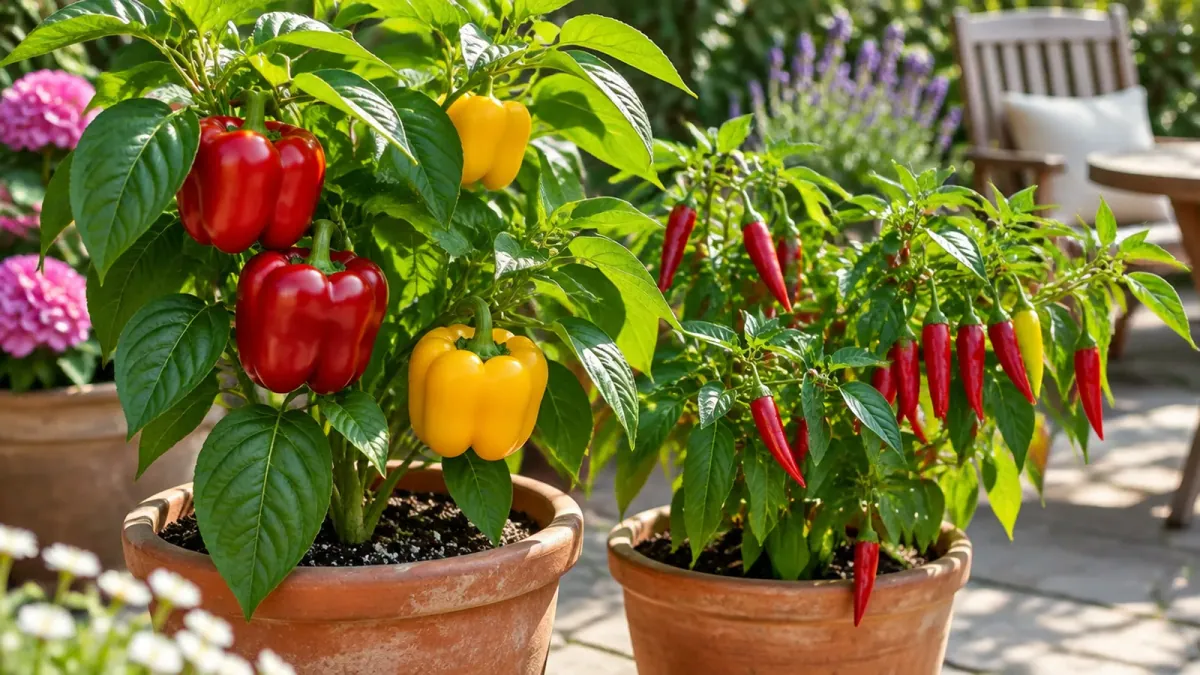
Peppers love heat, and containers warm up faster than garden soil. Pots let you place plants in the sunniest spot, move them in a cold snap and control soil, which suits balconies, patios and cold climates. Many varieties are compact enough for pots, giving a surprising harvest from a small footprint. For more guides, visit our vegetable gardening hub. Our list of vegetables to grow in containers covers other pot crops, and our guide to the easiest vegetables to grow and vegetable garden for beginners help you plan.
Choose the right variety
| Type | Examples | Notes |
|---|---|---|
| Sweet bell peppers | ‘California Wonder’, compact bells | Need a warm season; 5-gallon pots |
| Sweet snacking peppers | ‘Lunchbox’, mini sweet types | Productive; good in pots |
| Banana and Italian types | ‘Banana’, ‘Corno di Toro’ | Medium plants |
| Jalapeño and medium-heat | ‘Jalapeño’, ‘Serrano’ | Very productive in pots |
| Hot peppers | Cayenne, Thai chili, habanero | Compact and prolific; handle with gloves |
| Ornamental peppers | Small, colorful fruit | Attractive; not for eating unless labeled for food |
Check the days to maturity on the seed packet: short-season types (60 to 70 days) suit cooler areas.
Choose a pot and soil
| Factor | Recommendation |
|---|---|
| Size | At least 3–5 gallons; larger is better |
| Material | Plastic or glazed pots hold moisture; terra-cotta dries faster |
| Color | Dark pots warm soil but can overheat in hot climates |
| Drainage | Several holes; raise pots on feet |
| Mix | Quality potting mix with compost; avoid garden soil |
Mix in slow-release fertilizer at planting. Our guide to improving garden soil explains compost and amendments.
When and how to start
Peppers grow slowly and need warmth.
- Start seeds 8 to 10 weeks before your last frost date, indoors at 75 to 85°F.
- Give strong light once seedlings sprout.
- Pot up as seedlings grow.
- Harden off for a week before moving out.
- Transplant when nights stay above about 55°F and the weather is warm.
- Plant at the same depth as in the nursery pot, unlike tomatoes.
- Water well and stake taller plants.
Buying transplants is simpler. Choose stocky plants without flowers or fruit.
Sun, heat and placement
Peppers need 6 to 8 hours of direct sun. A south-facing patio or wall radiates heat and extends the season. In very hot climates, provide afternoon shade, because temperatures above about 90°F can cause flower drop. In cool climates, use dark pots and move them to the warmest spot. Keep pots out of strong wind, and bring them in on cold nights.
Watering
Water when the top inch or two of soil is dry, deeply, until it drains. Pots dry out quickly in summer, so you may need to water daily. Steady moisture matters: swings between wet and dry can cause blossom end rot and flower drop. Mulch the surface with straw or bark and use self-watering pots if you travel. Tomato watering advice applies here too.
Feeding
| Stage | Feed |
|---|---|
| Transplanting | Slow-release fertilizer in the mix |
| Vegetative growth | Balanced fertilizer every 2–3 weeks |
| Flowering and fruiting | Lower nitrogen, higher phosphorus and potassium (a tomato fertilizer works) |
| Late season | Reduce feeding |
Too much nitrogen gives big leafy plants with few peppers. Follow label directions.
Support and pruning
Large plants and heavy fruit can snap stems, so use a stake or small cage. Pinch off the first flowers on young transplants to encourage stronger growth, then allow flowering. Remove yellow leaves and, in cool climates, lightly prune lower branches for airflow. Top the plant late in the season to ripen existing fruit.
Pollination
Peppers are self-fertile, but wind and shaking help release pollen. On calm patios or indoors, gently shake plants or tap flower stems during the day. Pollination problems show as flowers that drop without fruiting.
Harvest
Pick peppers when they reach full size, either green or at full color. Green peppers are immature, and most turn red, yellow or orange if left longer, becoming sweeter. Cut stems with scissors to avoid breaking branches. Regular picking encourages more fruit. Wear gloves when handling hot peppers, and avoid touching your eyes.
Common problems
| Problem | Cause | Fix |
|---|---|---|
| Flower drop | Heat, cold, uneven watering, too much nitrogen | Steady water; adjust feed; shade or protect |
| Blossom end rot | Uneven watering | See blossom end rot; water evenly |
| Yellow leaves | Overwatering, nutrient shortage | Check drainage; feed |
| Sunscald | Strong direct sun on fruit | Provide shade; keep foliage |
| Aphids | Soft new growth | Rinse; soap spray |
| Slow growth | Cool weather, small pot | Warm up; move to a bigger pot |
Overwintering
Before frost, prune plants back by half, check for pests, and bring them to a bright, cool spot. Water sparingly. Move outdoors again when nights stay above about 55°F.
Pets
Edible pepper plants (Capsicum) are not listed on the ASPCA toxic plant list, but ornamental pepper (Solanum pseudocapsicum, also called Jerusalem cherry) is listed as toxic to dogs and cats. Hot peppers can irritate pets’ mouths and stomachs, so keep fruit out of reach.
Quick pepper timeline
| Time | Task |
|---|---|
| 8–10 weeks before last frost | Sow seeds indoors on a warm mat |
| 2–3 weeks before last frost | Harden off seedlings |
| 1–2 weeks after last frost | Transplant to pots |
| 4–6 weeks later | Flowers appear; switch to a lower-nitrogen feed |
| 8–12 weeks after transplanting | First peppers ready; keep picking |
Frequently asked questions
What size pot do peppers need?
Most pepper plants grow well in a pot of at least 3 to 5 gallons, with 5 gallons or larger giving better yields for full-size varieties. Compact and small-fruited types can manage in 2- to 3-gallon pots. The pot must have drainage holes, and larger containers dry out less quickly, which keeps watering steadier.
How much sun do peppers need?
Peppers need 6 to 8 hours of direct sun a day to flower and fruit well. In very hot climates, afternoon shade can help prevent blossom drop and sunscald. Indoors, they need a strong grow light. Place pots against a warm south-facing wall to hold heat, and bring them in if nights fall below about 50°F.
Why are my pepper plants dropping flowers?
Blossom drop is usually caused by temperature extremes (above roughly 90°F by day or below about 60°F at night), uneven watering, too much nitrogen or poor pollination. Keep watering steady, feed with a balanced or tomato-style fertilizer, shade from the harshest afternoon heat and gently shake plants to help pollination.
How often should I water peppers in pots?
Water when the top inch or two of soil is dry. In hot weather, this may be daily; in cooler weather, every few days. Water deeply until it drains, and avoid letting pots dry out completely or sit in standing water. Mulching the surface and using larger pots help keep moisture steady.
Can I overwinter pepper plants?
Yes. Peppers are perennials in warm climates. Before frost, cut plants back by about half, check for pests, and bring pots into a bright, cool spot with a grow light if needed. Water sparingly through winter and move them back outdoors when nights stay above 55°F. Expect lower production in the first months.