Yellow Leaves on Tomato Plants: Causes and Fixes
On this page
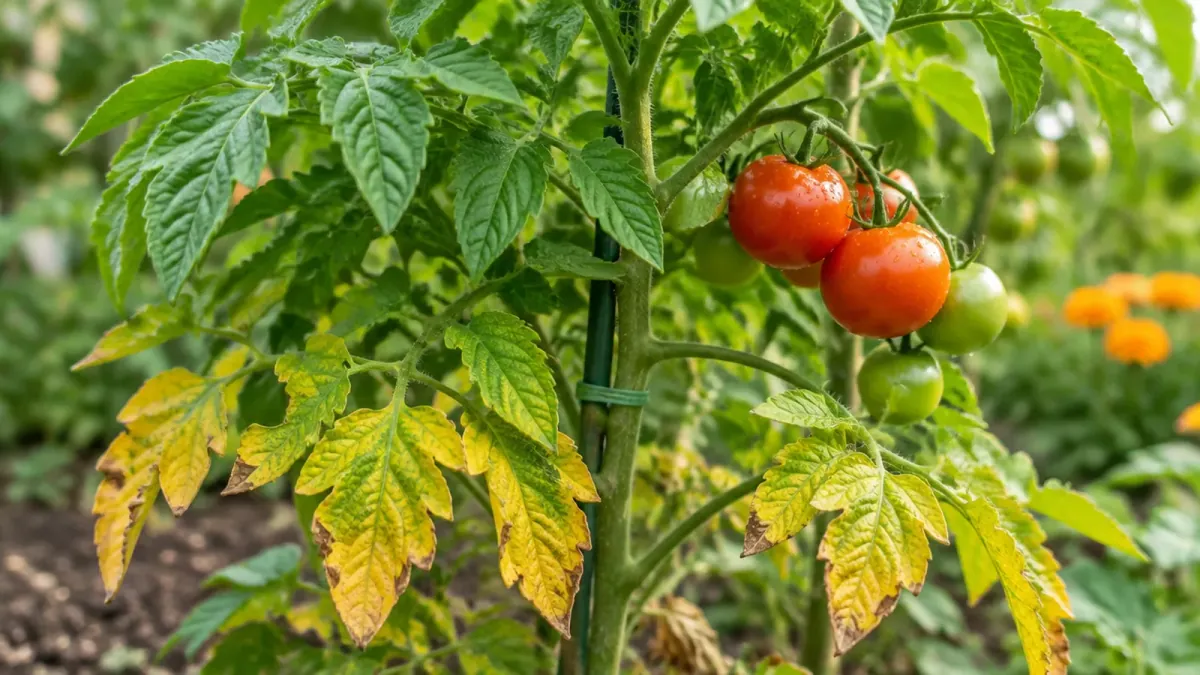
Yellow leaves on tomato plants most often come from uneven watering, a nitrogen shortage or fungal leaf disease. Check where the yellowing starts, whether the leaves have spots, and how moist the soil is. Slow yellowing of a few lower leaves is usually normal, while fast yellowing, spots or wilting need action.
First, check what’s normal
A few yellow leaves low on a healthy tomato plant are often nothing to worry about. Older leaves at the base get shaded and the plant moves nutrients to new growth and fruit. If new growth is green, flowers are setting and only the bottom leaves are yellowing slowly, remove them and carry on. For more tomato guides, visit our tomato plants hub.
Common causes of yellow tomato leaves
| Cause | What it looks like | Fix |
|---|---|---|
| Overwatering | Yellow, limp leaves; soggy soil | Let soil dry; improve drainage |
| Underwatering | Yellow, curled or crisp leaves; dry soil | Water deeply and steadily |
| Nitrogen shortage | Older leaves pale yellow, growth slow | Feed with balanced fertilizer |
| Magnesium shortage | Yellow between green veins on older leaves | Epsom salt or magnesium fertilizer, if soil test agrees |
| Iron shortage | Yellow new leaves with green veins | Correct high soil pH; use chelated iron |
| Early blight | Brown spots with rings, then yellow | Remove leaves; mulch; fungicide if needed |
| Septoria leaf spot | Small spots with dark edges, then yellowing | Remove infected leaves; avoid wet foliage |
| Fusarium or Verticillium wilt | One-sided yellowing, wilting | Remove plant; choose resistant varieties |
| Tobacco mosaic virus | Mottled yellow-green leaves | Remove plant; wash hands and tools |
| Pests (aphids, spider mites) | Speckled yellow leaves; visible insects | Spray with water; insecticidal soap |
| Heat or sun stress | Bleached or yellow leaves in hot weather | Provide shade; water well |
Read the pattern
Lower leaves yellow first
This is the classic sign of a nitrogen shortage, overwatering or early blight. Check soil moisture, look for spots and think about when you last fed the plants. If leaves also have target-like rings, suspect early blight; early blight is a common fungal disease on lower leaves.
Yellow between green veins
Yellowing between the veins, with veins still green, points to a magnesium or iron shortage. Magnesium problems usually show on older leaves, iron problems on new growth. Both are more common in potted plants or in soil with the wrong pH. A soil test shows the cause before you add anything.
Whole plant pale and slow
The plant may be short of nitrogen or sitting in cold, wet soil that stops roots working. Feed with a balanced fertilizer and wait for the soil to warm. See our guide to the best fertilizer for tomato plants.
Spots, rings or fuzzy patches
These indicate fungal disease. Remove infected leaves, mulch to stop soil splash and avoid wetting foliage.
Yellowing with wilting
If leaves yellow and plants wilt even when the soil is moist, soilborne wilt diseases such as fusarium or verticillium may be the cause. Cut open a lower stem: brown streaks inside suggest one of these. There is no cure, so remove the plant and choose resistant varieties next time (labelled V, F or N on seed packets).
Watering problems
Watering is the most common cause. Plants in soggy soil can’t take up oxygen and nutrients, so leaves yellow and droop. Dry soil makes leaves yellow, curl and dry out. The fix is steady, deep watering: see our guide to how often to water tomato plants.
| Check | Overwatered | Underwatered |
|---|---|---|
| Soil two inches down | Wet or muddy | Dry and crumbly |
| Leaves | Yellow, limp | Yellow, curling, crispy |
| Pot weight | Heavy | Very light |
| Fix | Reduce; improve drainage | Water deeply; mulch |
Nutrient problems
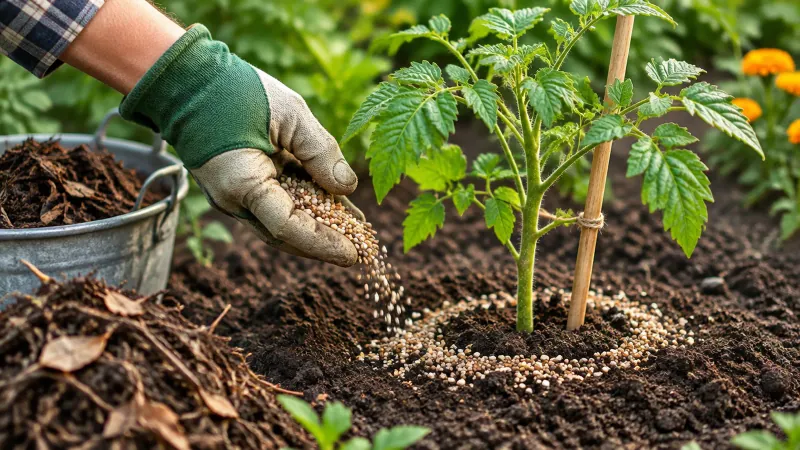
Tomatoes are heavy feeders. Yellowing from a shortage of nitrogen starts on older, lower leaves and spreads upward. Fixing it takes a few steps.
- Test the soil if you can, and don’t guess.
- Feed with a balanced vegetable fertilizer, following the label.
- Add compost around the base.
- Avoid excess nitrogen later, which creates lots of leaves and few tomatoes.
- Check pH: tomatoes like about 6.2 to 6.8. Out-of-range pH locks up nutrients.
Diseases and pests
Early blight
Dark spots with concentric rings appear on lower leaves, which then turn yellow and drop. Remove affected leaves, mulch, water at the base and rotate crops. A copper or other labeled fungicide can slow spread.
Septoria leaf spot
Many small, round spots with dark borders and gray centers. Treat as for early blight.
Aphids and spider mites
Check leaf undersides. Spray with water, then use insecticidal soap if needed.
Virus
Mottled yellow and green leaves, stunted growth. No cure; remove the plant and wash hands.
When it’s heat or transplant shock
New transplants often yellow slightly for a week or two. Plants in extreme heat may also bleach or yellow. Provide shade in the afternoon, mulch and water steadily. Most plants recover on their own.
Step-by-step: what to do
- Identify the pattern: where is the yellowing, are there spots, how moist is the soil?
- Remove yellow and spotted leaves with clean snips.
- Correct watering.
- Feed if the plant is pale overall.
- Improve airflow: prune lower leaves and thin suckers; see how to prune tomato plants.
- Mulch to stop soil splash.
- Recheck in a week: new growth should be green.
Preventing yellow leaves
| Habit | Why it helps |
|---|---|
| Water deeply and evenly | Avoids stress swings |
| Mulch 2–3 in | Keeps soil moisture steady, stops splash |
| Feed regularly | Prevents nutrient shortages |
| Space plants properly | Better airflow; see tomato plant spacing |
| Rotate crops yearly | Reduces soilborne disease |
| Choose resistant varieties | Fewer disease problems |
| Plant at the right time | Avoids cold-soil stress; see when to plant tomatoes |
Yellow leaves on potted tomatoes
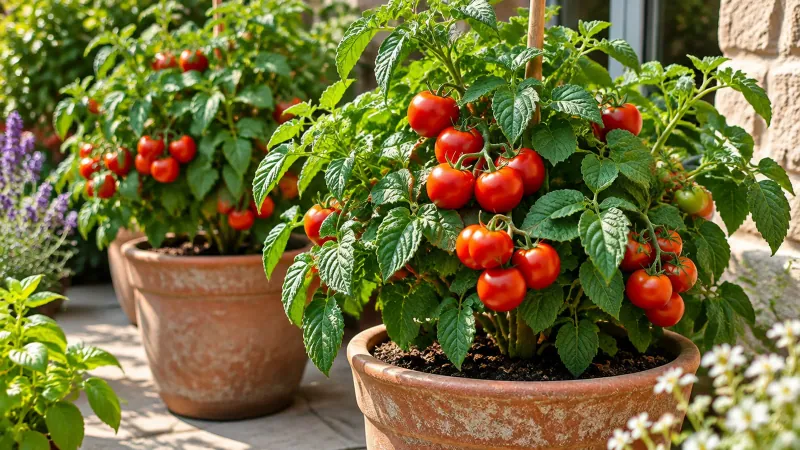
Pots dry out quickly and leach nutrients with each watering, so yellowing is common. Make sure pots drain, water consistently and feed every couple of weeks. See our guide to growing tomatoes in pots.
Safety note
Tomato plant leaves and stems are on the ASPCA toxic-plant list for dogs and cats, so keep pets away from plants and trimmed leaves.
Frequently asked questions
Why are my tomato leaves turning yellow?
The most common causes are uneven watering, a nitrogen shortage and fungal disease. Lower leaves yellowing slowly is often normal aging or low nitrogen. Yellow leaves with dark spots suggest early blight or septoria, while yellowing with wilting in wet soil points to overwatering. Check the pattern, the soil moisture and the plant’s age before treating.
Should I remove yellow leaves from tomato plants?
Yes, remove leaves that are fully yellow, spotted or diseased. Cut them cleanly at the stem with clean snips, and don’t compost diseased leaves. Removing them improves airflow and lowers the chance of disease spreading. Don’t strip more than about a third of the foliage at once, because the plant still needs leaves to feed fruit.
Are yellow leaves on tomatoes from overwatering or underwatering?
Either can cause them. Overwatered plants have yellow, limp leaves and soggy soil, often starting low on the plant. Underwatered plants have yellowing, curling or crisp leaves and dry soil. Push a finger two inches into the soil to see which applies, and then water deeply but less often, or more often, to match.
Will yellow tomato leaves turn green again?
Usually not. Once a leaf has turned fully yellow it rarely regains its green color, even after you fix the cause. What matters is that new growth comes in healthy and green. If the cause was a nutrient shortage, new leaves should recover within a couple of weeks of feeding, even though older yellow leaves stay yellow.
Do yellow leaves mean my tomato plant is dying?
Not necessarily. A few yellow lower leaves are common as plants age and fruit sets. Concern is warranted if yellowing spreads fast, leaves have black or brown spots, stems have dark streaks or the whole plant wilts. Those signs can mean disease, which needs prompt action such as removing affected parts and improving airflow.