Companion Plants for Tomatoes (and What Not to Plant)
On this page
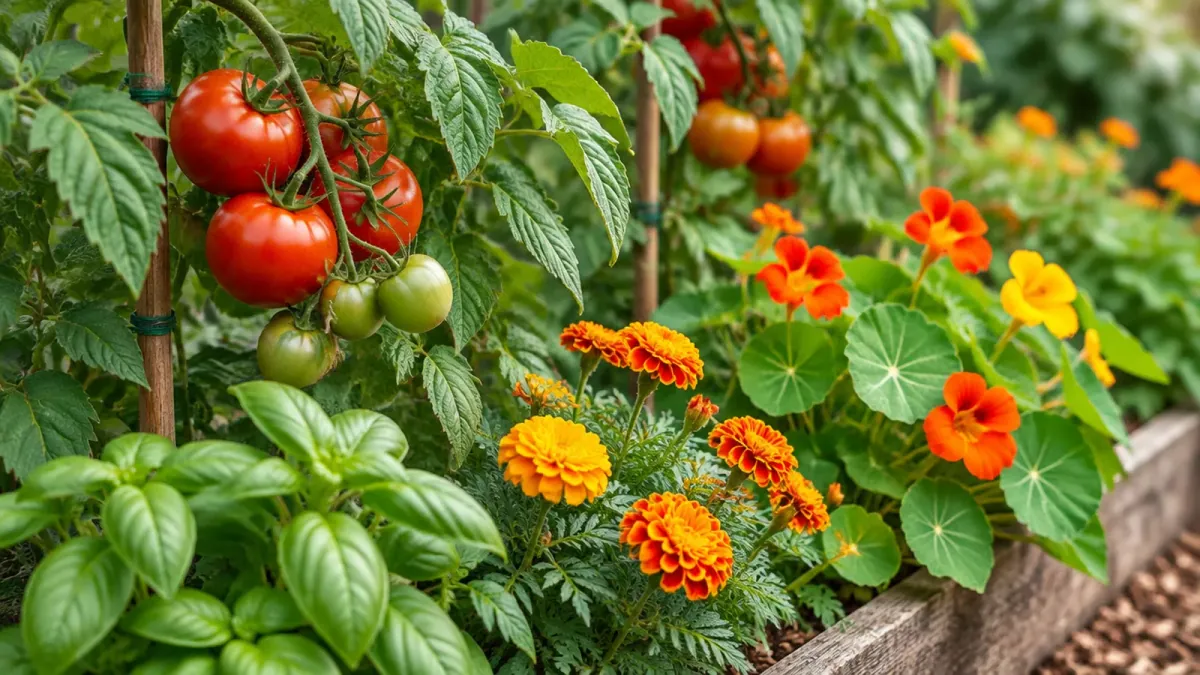
Good companion plants for tomatoes include basil, chives, parsley, marigolds, nasturtiums, carrots and lettuce, which share similar growing conditions or add flowers that attract helpful insects. Avoid planting brassicas, fennel, corn and other nightshades close by. Companion planting evidence is mixed, so treat it as a helpful extra, not a guarantee.
What companion planting can and can’t do
Companion planting means growing plants together so they help each other, by attracting beneficial insects, confusing pests, shading soil or making good use of space. Some benefits are well supported, such as flowers that feed pollinators and predatory insects. Others, such as basil improving tomato flavor, are mostly folk wisdom. A sensible approach is to choose companions that make practical sense: similar needs, good use of space and flowers for insects. For more tomato guides, visit our tomato plants hub.
Best companion plants for tomatoes
| Companion | Possible benefit | Notes |
|---|---|---|
| Basil | Same sun and water needs; attracts pollinators | Pinch flowers to keep leaves coming |
| Marigolds | Flowers attract beneficial insects | French marigolds may help with root-knot nematodes |
| Chives | Strong scent; attracts pollinators | Compact; fits at edges |
| Parsley | Flowers attract beneficial insects | Biennial; sits under tomatoes happily |
| Nasturtiums | Possible trap crop for aphids | Edible flowers; sprawling |
| Carrots | Use space under tall plants | Loose soil; keep tomato roots from crowding |
| Lettuce | Shaded by tomatoes in summer | Bolts less in partial shade |
| Calendula | Attracts pollinators and predators | Pot marigold; ASPCA lists it as non-toxic to cats and dogs |
| Borage | Attracts pollinators | Large and self-seeding; ASPCA lists it as toxic to cats and dogs |
| Dill | Flowers attract beneficial insects | Keep away from fennel; ASPCA lists dill as non-toxic |
Herbs that suit tomatoes
Herbs are natural neighbors because they like similar sun and warmth. See our guide to companion planting herbs for general rules, for growing details. Chives, parsley and basil all fit around tomato bases without competing much for light.
Flowers that help
| Flower | Why plant it |
|---|---|
| Marigolds | Bright flowers for pollinators; popular in vegetable beds |
| Nasturtiums | Edible flowers; may attract aphids away from tomatoes |
| Calendula | Long-blooming; attracts hoverflies |
| Alyssum | Small flowers attract tiny predatory insects |
| Zinnias | Bright color; attract pollinators |
What not to plant near tomatoes
| Plant | Problem |
|---|---|
| Brassicas (cabbage, broccoli, kale) | Compete for nutrients; may stunt growth |
| Fennel | Releases compounds that can inhibit neighbors |
| Corn | Shares pests such as corn earworm (tomato fruitworm) |
| Potatoes | Same family; share blight, so rotate and separate |
| Eggplant and peppers | Share diseases; give space and rotate |
| Walnut trees | Release juglone, which harms tomatoes |
| Dense, thirsty plants | Compete for water and nutrients |
Companion planting and crop rotation
Even good companions don’t replace crop rotation. Don’t plant tomatoes or other nightshades in the same spot more than once in three years, because soilborne diseases build up. Rotate with legumes, brassicas or root crops. A simple map of your beds each year makes this easy. For general layouts, see our vegetable companion planting chart.
How to plant companions
- Plan the layout before planting. Mark where tomatoes go.
- Plant companions at the edges or between rows, not crowded against stems.
- Match water needs. Avoid pairing tomatoes with plants that want to dry out.
- Use low or trailing plants under tall tomatoes.
- Add flowers every few feet to attract insects.
- Keep paths open for picking.
Does it work?
Research is limited. Flowers that feed beneficial insects have good support. French marigolds can suppress root-knot nematodes when grown as a dense cover crop before planting tomatoes. Claims that basil boosts tomato flavor, or that garlic deters most pests, rest mainly on experience. Treat companion planting as low-cost, low-risk extras, and keep up basics such as watering, mulch and good spacing; see tomato plant spacing.
Pet safety note
Tomato plants themselves, and some companions such as chives and borage, appear on ASPCA lists of plants toxic to cats and dogs. If you have pets that chew plants, check each companion on the ASPCA list before planting, and use fencing or raised beds where needed. Basil, dill and nasturtium (Tropaeolum) are listed there as non-toxic.
A sample tomato bed
| Position | Plant |
|---|---|
| Center row | Tomatoes, 24–36 in apart |
| Between tomatoes | Basil |
| Front edge | Chives, marigolds, lettuce |
| Back or ends | Nasturtiums trailing out |
| Rotate next year to | Beans, peas or leafy greens |
Companions for specific tomato types
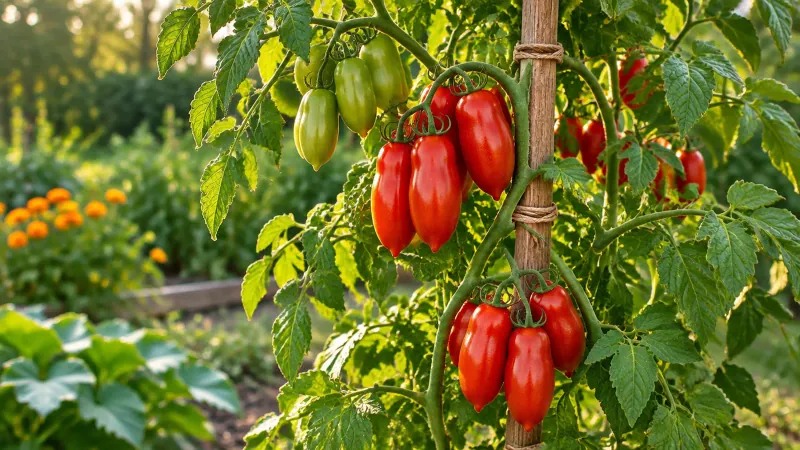
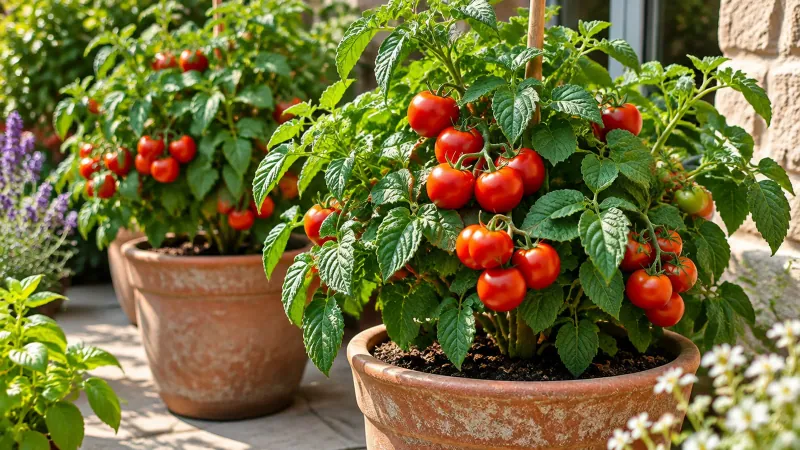
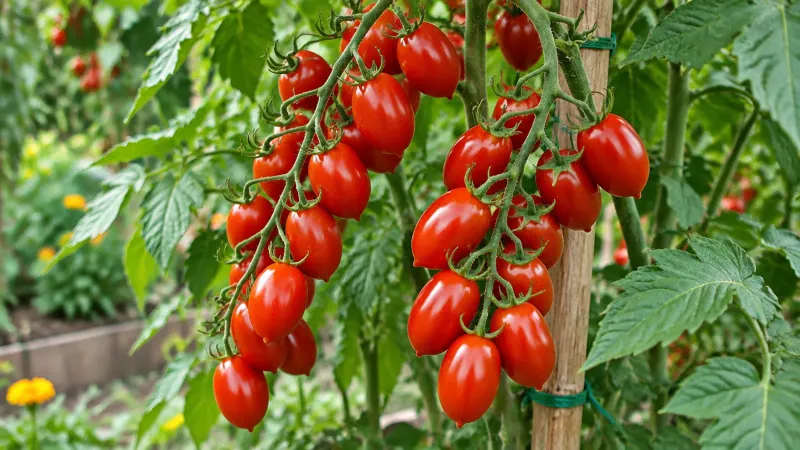
Tomato size and habit change what you can tuck beside them. Tall indeterminate plants, such as San Marzano (compare it with compact Roma in our guide to Roma vs San Marzano), cast heavy shade by midsummer, so shade-tolerant lettuce, parsley and chives do best under them, while sun-hungry basil and marigolds belong on the sunny south edge. Compact determinate plants leave more light at ground level, so low flowers such as alyssum and calendula can fill the gaps. In pots, keep it simple: one tomato plus a pot of basil or a few trailing nasturtiums at the rim. Our guide to growing tomatoes in pots covers container size and feeding.
Timing companion planting
| When | Companion task |
|---|---|
| Before planting tomatoes | Sow French marigolds as a dense cover crop and dig them in, if root-knot nematodes are a known problem |
| At transplanting | Set basil and chives 12 to 18 inches from stems; sow lettuce and carrot seed in gaps |
| Early summer | Sow nasturtiums and alyssum for late-season flowers; thin carrots |
| Midsummer | Pinch basil flowers; harvest lettuce before heat makes it bitter |
| Fall | Remove spent plants, and sow a cover crop or garlic where tomatoes grew only if the bed is disease free |
Common companion-planting mistakes
- Crowding companions against tomato stems, which cuts airflow and invites fungal disease.
- Planting thirsty companions with tomatoes that you want to water deeply but infrequently.
- Using vigorous spreaders, such as mint, in the bed itself; grow them in pots instead.
- Expecting companions to replace feeding, pruning, mulch and steady watering.
- Letting dill or fennel go to seed beside tomatoes, where they cross-compete.
- Ignoring crop rotation because the bed looks good.
A few well-chosen plants, such as basil and a ring of marigolds, are usually better than a crowded patchwork. Keep records of what you try, and judge each pairing by how your own tomatoes perform rather than by folklore.
Frequently asked questions
What are the best companion plants for tomatoes?
Basil, marigolds, chives, parsley, nasturtiums, carrots and lettuce are popular choices. Basil is a classic partner and shares similar water and sun needs. Marigolds and nasturtiums attract beneficial insects and may lure pests away. Low crops such as lettuce make use of space under tall tomato plants.
Does basil really help tomatoes grow better?
Evidence is mostly anecdotal. Basil grows well beside tomatoes because both like sun, warmth and regular water, and it is handy to pick together. Some gardeners say it improves flavor or deters pests, but studies are limited. Plant it for convenience and attracting pollinators, and don’t expect miracles.
What should not be planted near tomatoes?
Avoid planting brassicas such as cabbage and broccoli, fennel, and corn close to tomatoes. Other members of the nightshade family, such as potatoes and eggplants, share diseases like blight, so keep them apart or rotate crops. Walnut trees release a compound that can harm tomatoes growing within their root zone.
Can you plant tomatoes next to peppers?
Yes, with caution. Peppers like similar conditions to tomatoes and are often grown together. However, both are nightshades and share pests and diseases, so crowded planting can spread problems. Give both good spacing, rotate crops each year so neither follows the other in the same bed, and watch for disease.
Do marigolds protect tomatoes from pests?
Marigolds have a reputation for repelling pests, and French marigolds may help reduce root-knot nematodes in the soil when grown as a dense cover crop beforehand. For above-ground insects, the evidence is weak. Marigolds are still worth planting for their flowers, which attract pollinators and predatory insects.