Fiddle Leaf Fig Care: Keep It Alive and Growing
On this page
Fiddle leaf fig care means bright indirect light, steady watering when the top inch or two of soil is dry, a well-draining pot, warmth and as few moves and drafts as possible. The plant dislikes change and wet feet, so find a good spot and keep conditions consistent. Keep it away from cats and dogs.
About the fiddle leaf fig
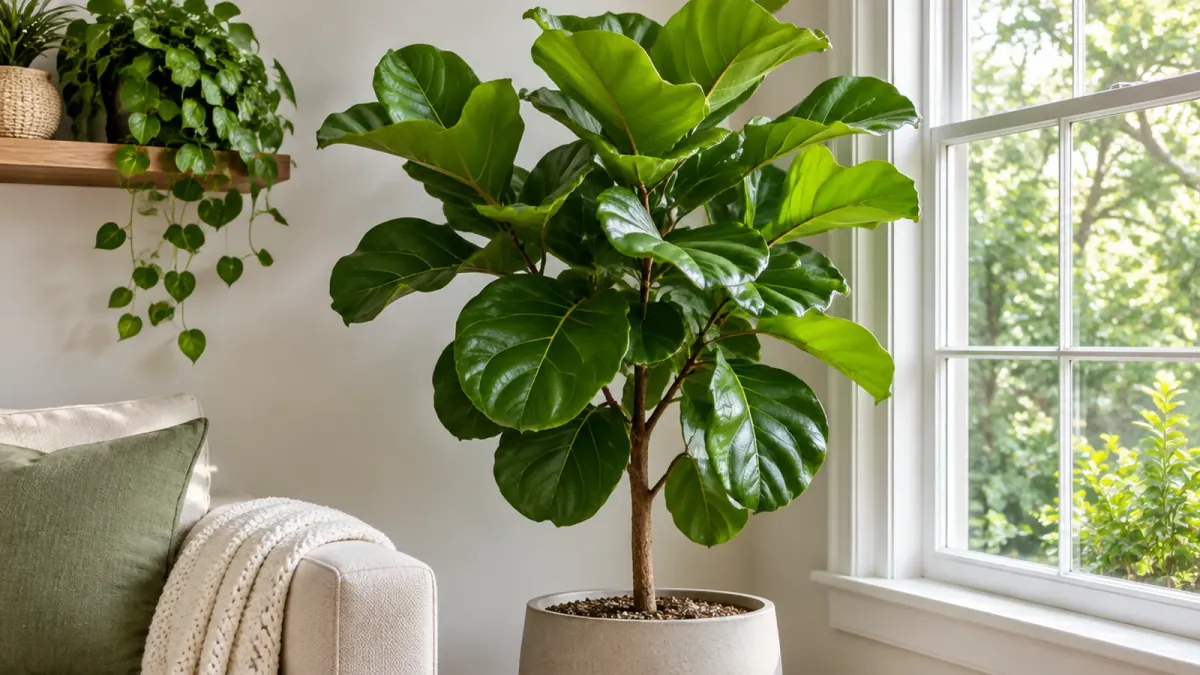
The fiddle leaf fig (Ficus lyrata) is a tropical tree from West Africa with large, violin-shaped leaves. It looks dramatic in a bright room, but has a reputation for being fussy. In reality, it just wants a steady environment: lots of light, consistent watering and no sudden changes. For more indoor plant guides, visit our indoor plants hub.
Light
This is the most important factor. Place your plant in bright, indirect light, such as near an east window or a few feet from a south or west window. A little direct morning sun is fine. Rotate the pot a quarter turn every couple of weeks so it grows evenly. Low light leads to dropped leaves and weak growth, so use a grow light if needed; see our guide to grow lights for indoor plants.
| Light | Result |
|---|---|
| Bright indirect | Best growth |
| Some direct morning sun | Fine |
| Hot afternoon sun through glass | Scorched leaves |
| Low light | Leaf drop, slow growth |
Watering
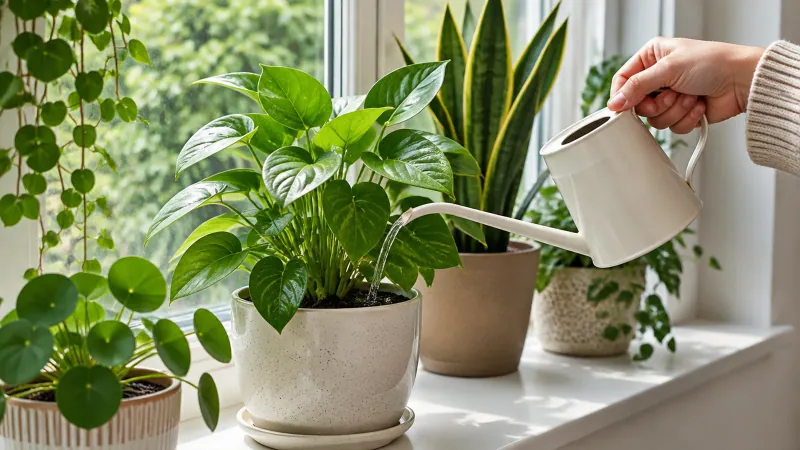
Water when the top one to two inches of soil is dry, thoroughly, until water drains from the base. Discard water from the saucer. Consistency matters: don’t let the plant sit in water or dry out completely. Use a moisture meter or a finger test. For a general guide, see our watering schedule for home plants, and the signs of overwatering plants.
Soil, pot and repotting
Use a well-draining potting mix with perlite, in a pot with drainage holes. Repot every one to two years in spring, to a pot one or two inches wider, or top-dress the soil on large plants.
Temperature, humidity and feeding
| Need | Details |
|---|---|
| Temperature | 65–80°F; avoid cold drafts and heat vents |
| Humidity | Moderate; avoid very dry air |
| Fertilizer | Balanced houseplant fertilizer every 2–4 weeks in spring and summer |
| Cleaning | Wipe leaves with a damp cloth to remove dust |
Placement and moves
Fiddle leaf figs hate being moved. A change in light, temperature or humidity can cause leaf drop. Choose a spot with good light, away from doors, vents and radiators, and try to leave it there. If you must move it, do so gradually and expect some adjustment.
Pruning for shape
Prune in spring to encourage branching or control height.
- Use clean, sharp pruners, wiped with alcohol.
- Cut just above a node or leaf scar where you want new branches.
- Notch or pinch the growing tip to encourage side shoots.
- Wear gloves, since sap can irritate skin.
Common problems
| Problem | Likely cause | Fix |
|---|---|---|
| Leaf drop | Move, draft, low light, watering change | Stabilize conditions; check roots |
| Brown spots in the leaf center | Overwatering and root rot | Let soil dry; check roots; repot if needed |
| Brown, crispy edges | Underwatering or dry air | Water thoroughly; raise humidity |
| Brown patches facing the window | Sunburn | Move back from hot sun |
| Yellow leaves | Overwatering | Check drainage; reduce watering |
| Leggy, bare trunk | Low light, no pruning | More light; prune to encourage branching |
| Pests (spider mites, scale, mealybugs) | Dry air, stress | See houseplant pests |
Root rot rescue
If you suspect root rot, take the plant out, rinse the roots and cut off any black, soft or smelly ones. Repot in fresh, dry mix in a clean pot with drainage, water lightly and keep in bright indirect light. Recovery can take months.
Fiddle leaf fig and pets
The ASPCA lists Ficus species (fig, weeping fig, Indian rubber plant) as toxic to dogs, cats and horses, and the fiddle leaf fig (Ficus lyrata) is a Ficus. Fig sap can irritate the mouth and skin. Keep the plant where pets cannot chew it, or choose an option from our guide to pet-safe house plants.
Quick care calendar
| Season | Tasks |
|---|---|
| Spring | Repot, prune, start feeding |
| Summer | Water regularly; keep from hot sun |
| Fall | Taper feeding |
| Winter | Water less; keep warm; avoid cold windows |
Alternatives if you struggle
If you keep losing fiddle leaf figs, try a tougher large plant such as a rubber plant, a ZZ plant or a snake plant. See our list of large indoor plants for options that tolerate lower light.
Choosing a healthy plant
When buying, look for a plant with firm, glossy leaves, no brown spots or holes, no bugs and a sturdy trunk. Check the soil: it should be damp, not soggy or bone dry. Avoid plants that are dropping leaves in the store, because a lot of trouble starts with shipping and moving. Once home, place it in good light and keep it there. Expect a few lost leaves as it adjusts.
Tree or bush: shaping your plant
Fiddle leaf figs can grow as a single trunk or branched tree.
| Shape | How to get it |
|---|---|
| Single trunk | Remove lower side shoots; let it grow tall |
| Branched tree | Cut the top or notch the trunk above a node in spring |
| Bushy | Prune several stems and pinch tips regularly |
Pruning in spring, when growth is active, gives the best results, and branches usually form from the nodes just below the cut.
Feeding and cleaning
Feed with a balanced liquid fertilizer at half strength every two to four weeks in the growing season, and stop in winter. Dust blocks light, so wipe each leaf with a soft damp cloth every few weeks. Avoid leaf shine sprays. Check the undersides for pests while you clean.
Trunk strength and support
Young plants may lean or bend, especially if they grew in a greenhouse. Rotate the pot every week or two, and use a stake or support if the trunk is weak. Gentle air movement from a fan strengthens trunks over time, though avoid direct drafts.
Frequently asked questions
Why is my fiddle leaf fig dropping leaves?
Leaf drop usually follows a change: a move, a draft, a shift in watering, or less light. Overwatering and root rot are common causes, as is underwatering. Check the soil, keep the plant away from vents and doors, and give it bright indirect light. Once conditions are steady, new growth should return.
How often should I water a fiddle leaf fig?
Water when the top one to two inches of soil are dry, usually every 7 to 10 days in spring and summer and less in winter. Water thoroughly until it drains and never leave it standing in water. Consistency matters: these plants dislike both soggy soil and long periods of dryness.
How much light does a fiddle leaf fig need?
It needs plenty of bright, indirect light, ideally near an east-facing window or a few feet back from a south or west window. Some direct morning sun is fine. Low light makes leaves drop and growth stall. If your rooms are dim, a full-spectrum grow light can make the difference.
What causes brown spots on fiddle leaf fig leaves?
Brown spots have several causes. Dark, spreading spots on the leaf interior often signal overwatering and root rot, brown edges can mean underwatering or low humidity, and crisp tan patches can be sunburn. Check the soil and roots first, adjust watering and light, and remove badly damaged leaves.
Is fiddle leaf fig toxic to pets?
Yes. The ASPCA lists Ficus species (fig, weeping fig, Indian rubber plant) as toxic to dogs, cats and horses, and fiddle leaf fig (Ficus lyrata) is a Ficus. The sap can irritate the mouth and skin. Keep it out of reach, and call your vet if your pet chews it.