Herbs That Grow in Shade
On this page
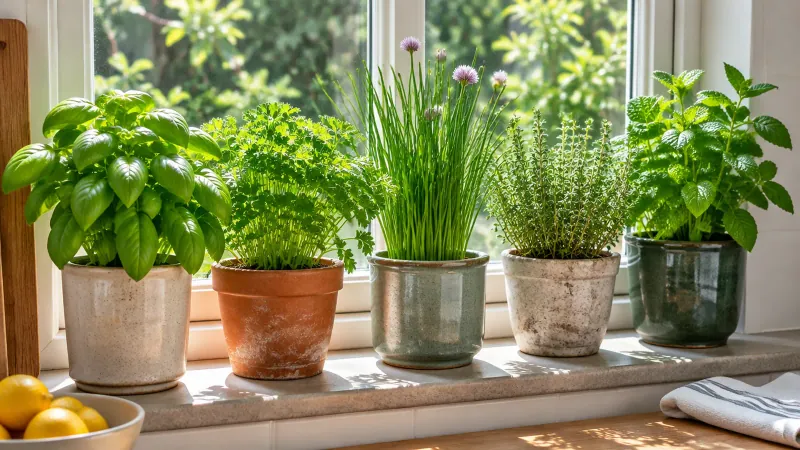
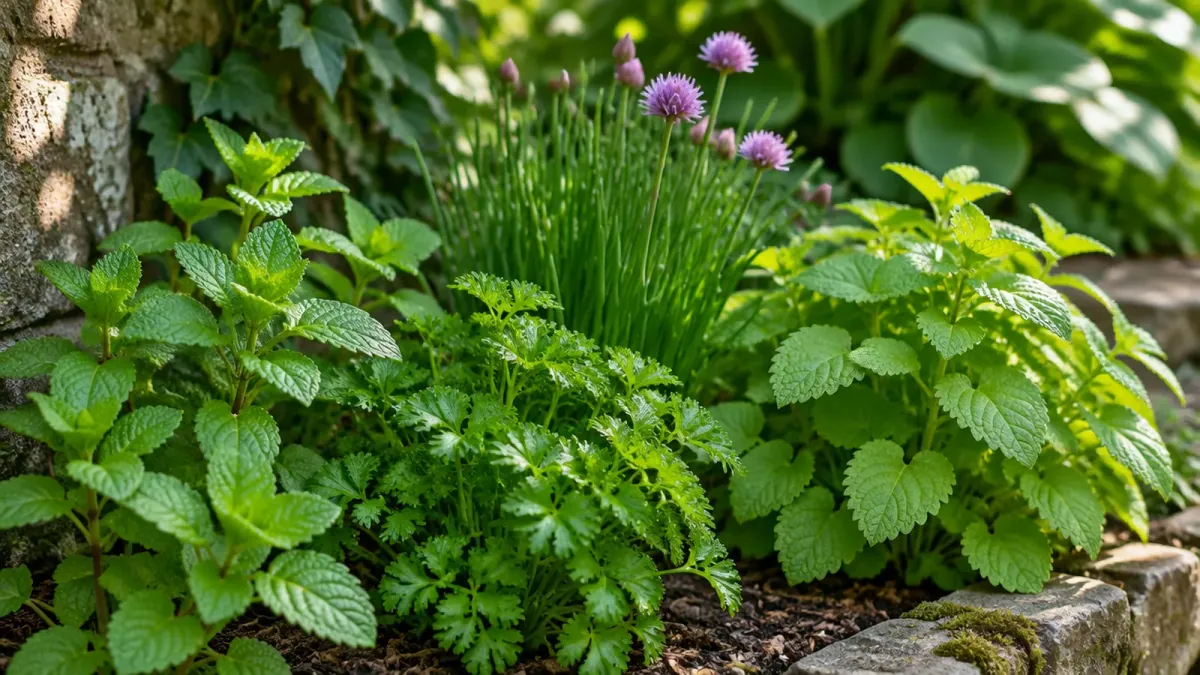
Herbs that grow in shade include mint, parsley, chives, lemon balm, cilantro, chervil, sorrel, lovage and sweet woodruff. These leafy herbs tolerate three to five hours of sun, especially gentle morning light, while sun-loving Mediterranean herbs such as rosemary, thyme and basil need far more. Expect slower growth but good harvests.
Understanding shade
Not all shade is the same. Gardeners use these rough terms.
| Light level | What it means | Herb outlook |
|---|---|---|
| Full sun | 6+ hours of direct sun | All herbs |
| Partial sun | 4–6 hours | Most herbs; Mediterranean types grow slowly |
| Partial shade | 3–4 hours, often morning | Mint, parsley, chives, cilantro, lemon balm |
| Dappled shade | Filtered light under trees | Chervil, sorrel, sweet woodruff, mint |
| Full shade | Under 3 hours | Few herbs; sweet woodruff, some mint |
Watch your garden for a day, noting when sun arrives and leaves, so you can match herbs to the right spot. For more herb guides, visit our herbs hub.
12 herbs that tolerate shade
| Herb | Light needed | Notes |
|---|---|---|
| Mint | 3–4 hours | Vigorous; grow in pots to contain it |
| Parsley | 3–5 hours | Slower in shade; stays leafy |
| Chives | 4 hours | Hardy perennial; tolerates part shade |
| Lemon balm | 3–4 hours | Spreads; leaves stay tender in shade |
| Cilantro | 3–4 hours | Bolts more slowly in cool shade |
| Chervil | 2–4 hours | Delicate, anise-like; likes cool shade |
| Sorrel | 3–4 hours | Lemony leaves; hardy perennial |
| Lovage | 3–5 hours | Tall; celery-like flavor |
| Sweet woodruff | 2–3 hours | Ground cover; used in drinks |
| Angelica | 3–4 hours | Large, biennial; likes moisture |
| Garlic chives | 4 hours | Flat leaves; garlicky flavor |
| Salad burnet | 3–4 hours | Cucumber-flavored leaves; hardy perennial |
Best shade herbs in detail
Mint
Mint is the classic shade herb. It grows in half-day sun and spreads fast, so grow it in a container to avoid takeover. See our guide to how to grow mint in pots.
Parsley
Parsley grows well with 3 to 5 hours of sun and stays tender in shade. Growth is slower than in sun, but leaves are still plentiful. See our guide to how to grow parsley.
Chives
Chives tolerate partial shade and come back each year. The purple flowers attract bees and are edible.
Lemon balm
Lemon balm thrives in light shade, has a gentle lemon scent and attracts pollinators. Cut it back regularly, since it self-seeds.
Cilantro
Cilantro appreciates afternoon shade, which slows bolting. See our guide to how to grow cilantro.
Chervil and sorrel
Both are cool-season herbs that actually prefer shade. Chervil bolts quickly in hot sun, while sorrel gives sharp, lemony leaves from spring to fall.
Herbs that struggle in shade
| Herb | Why it struggles |
|---|---|
| Basil | Needs warmth and strong light |
| Rosemary | Mediterranean; needs 6–8 hours of sun |
| Thyme | Leggy, woody and prone to rot in shade |
| Oregano | Weak flavor and weak growth |
| Lavender | Needs full sun and dry soil |
| Sage | Floppy growth; more disease |
If you only have shade, don’t fight it. Grow shade-tolerant herbs in the ground and move sun lovers to pots on a sunny step or patio. See our list of perennial herbs to choose long-lived plants.
How to grow herbs in shade
- Map your light across the day and through the season.
- Choose the brightest spot you have, ideally with morning sun.
- Improve the soil with compost, since shady soil is often poor and root-filled.
- Water carefully: shade slows drying, but tree roots can create dry soil.
- Space plants widely for good airflow, because damp shade invites fungal disease.
- Harvest regularly, since leaves are the goal.
- Feed lightly: too much nitrogen gives weak, floppy growth.
Shade herbs in containers
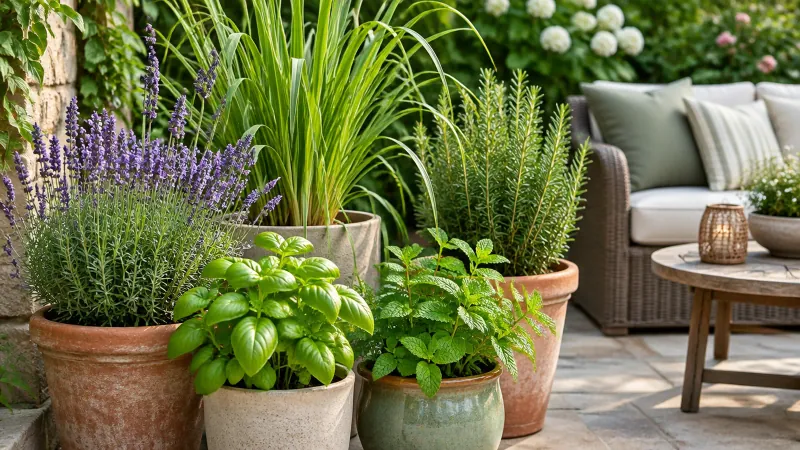
Pots let you move herbs to catch more light as the season changes. Use light-colored pots in hot spots, rotate pots weekly and raise them on stands or walls to catch light. Mint in a pot beside a shady door keeps it handy and contained.
Growing herbs in shade indoors
Place pots in your brightest window. A basic LED grow light, on 10 to 12 hours a day, lets mint, parsley and chives thrive. See our guide to the best herbs to grow indoors.
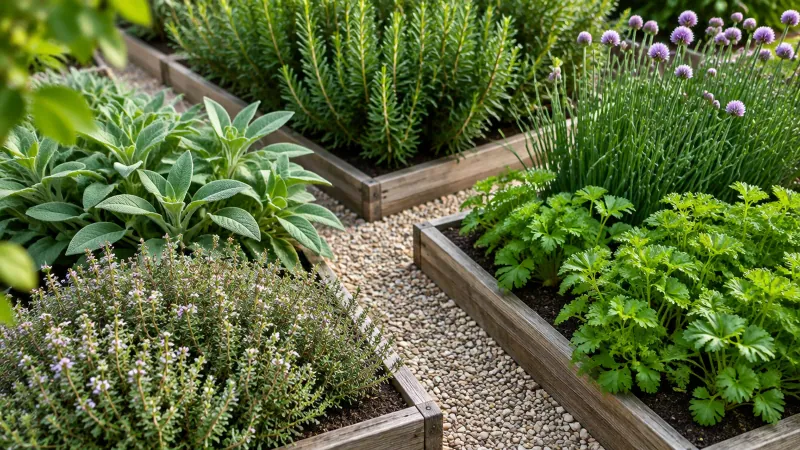
Combining shade herbs in the garden
| Combination | Why it works |
|---|---|
| Chives, parsley and lemon balm in a bed | All tolerate shade and similar moisture |
| Mint in a sunken pot among sorrel | Mint is contained |
| Sweet woodruff and chervil under shrubs | Ground cover plus delicate herbs |
| Cilantro in the shade of taller plants | Slows bolting |
Pest and disease notes
Shade means slow-drying leaves, so watch for slugs, snails and mildew. Water at the base in the morning, keep plants spaced, remove dead leaves and pick off slugs at dusk.
Pets
Some shade herbs appear on ASPCA lists: mint, chives and parsley are listed as toxic to dogs and cats, while cilantro and lemon balm are listed as non-toxic. Keep pets from chewing plants you aren’t sure of, and check any herb on the ASPCA list before planting.
Frequently asked questions
Which herbs grow best in shade?
Mint, parsley, chives, lemon balm, cilantro, chervil, sweet woodruff, sorrel and lovage tolerate partial shade well. Most leafy herbs, grown for their leaves rather than flowers or seeds, need less sun than Mediterranean herbs. In deeper shade, growth slows and flavor can be milder, but plants stay usable and often last longer before bolting.
How much sun do herbs need?
Mediterranean herbs such as rosemary, thyme and sage need 6 to 8 hours of direct sun. Leafy herbs such as parsley, mint, chives and cilantro grow well with 3 to 5 hours, particularly morning sun with afternoon shade. Full shade, under 3 hours, is too little for most herbs, though a few such as sweet woodruff cope.
Can basil grow in shade?
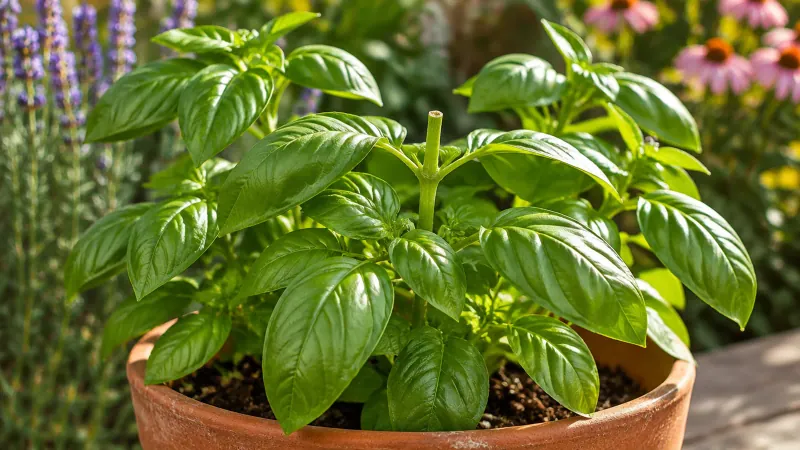
Basil prefers full sun and needs at least 6 hours to grow well. In shade it becomes leggy, weak and low in flavor. If you only have a shady spot, choose mint, parsley, chives or lemon balm instead, or grow basil in a pot that you can move into the sun or under a grow light.
Do shade herbs need less water?
Not always. Shaded soil dries more slowly, so plants need water less often than in full sun. But shade under trees can be dry because roots take moisture, so check the soil two inches down before watering. Keep leafy herbs evenly moist, since they bolt or wilt if allowed to dry out completely.
Can I grow herbs indoors with little light?
Some herbs manage with a bright window, but most need a grow light for indoor growing. Mint, parsley, chives and lemon balm cope with less light than basil or rosemary. Place pots in your brightest window, rotate them weekly and consider a basic LED grow light for 10 to 12 hours a day in winter.