Monstera Care: Light, Water, Support and Pruning
On this page
Monstera care comes down to bright indirect light, watering when the top couple of inches of soil dry, a chunky, well-draining mix and a moss pole or other support as it grows. Prune to control size, wipe the big leaves and feed in the growing season. Monstera is toxic to cats and dogs.
About monstera
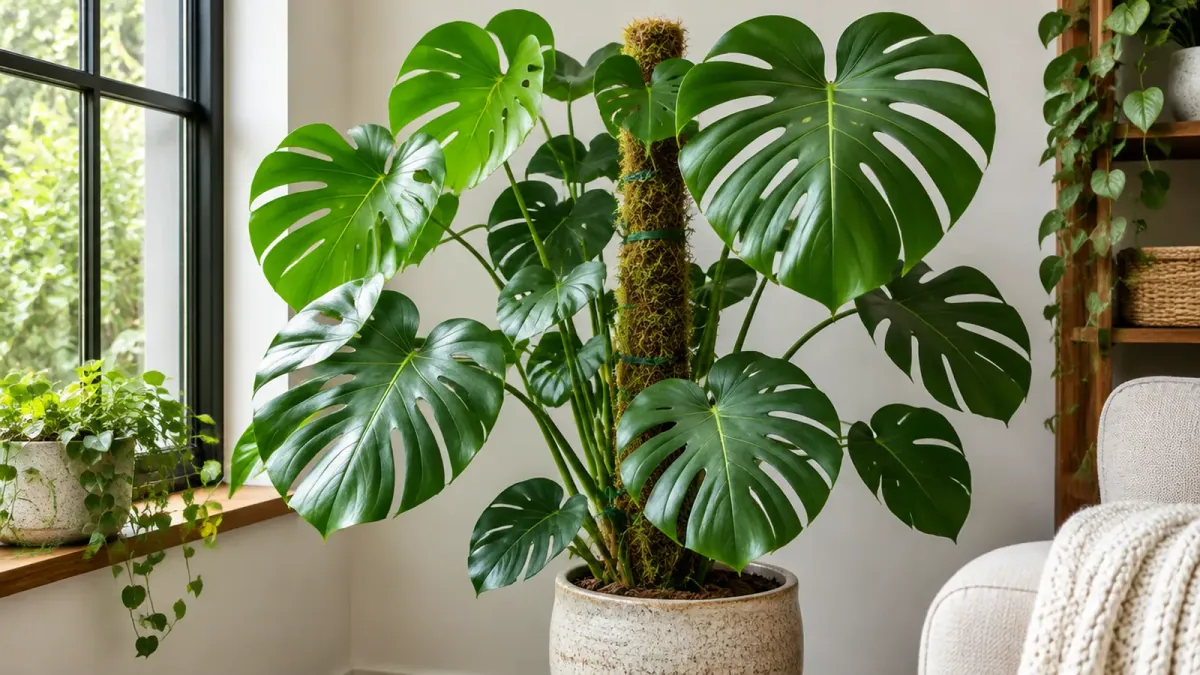
Monstera deliciosa, also called Swiss cheese plant, is a climbing aroid from Central American rainforests. Mature leaves develop splits and holes, called fenestrations. Indoors it grows quickly in the right conditions, reaching several feet tall, so it suits roomy spots. Related plants include Monstera adansonii (a smaller vine with holey leaves) and variegated types. For more indoor plant guides, visit our indoor plants hub.
Light
Monstera likes bright, indirect light. East or west windows work well, or a few feet back from a south window. In low light, the plant survives but grows slowly with small, solid leaves and long gaps between leaves. Direct afternoon sun can scorch leaves. A grow light is a good fix in dim homes; see our guide to grow lights for indoor plants.
| Light | Result |
|---|---|
| Bright indirect | Large leaves, more splits |
| Medium | Slower, smaller leaves |
| Low | Leggy, solid leaves |
| Direct hot sun | Scorched, bleached patches |
Watering
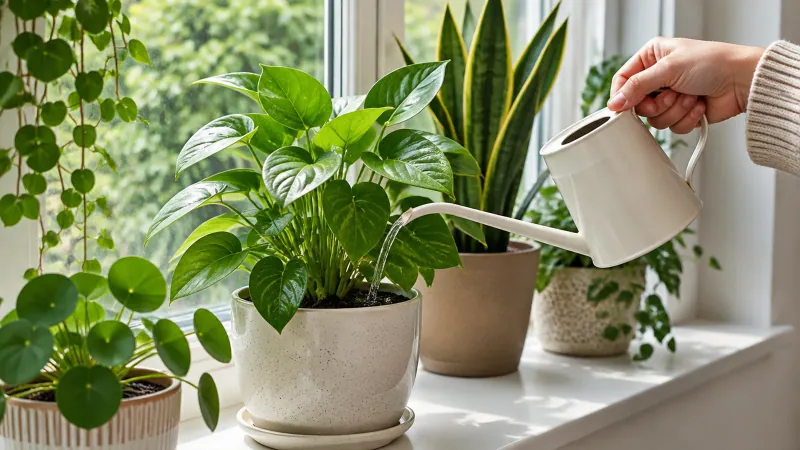
Water when the top two inches of soil are dry, thoroughly, until it drains, and discard excess from the saucer. Overwatering and poor drainage cause root rot, the most common cause of death. Reduce watering in winter. For schedules, see our guide to watering schedules for home plants.
| Season | Typical frequency |
|---|---|
| Spring and summer | About weekly |
| Fall | Every 1–2 weeks |
| Winter | Every 2–3 weeks |
Soil and potting
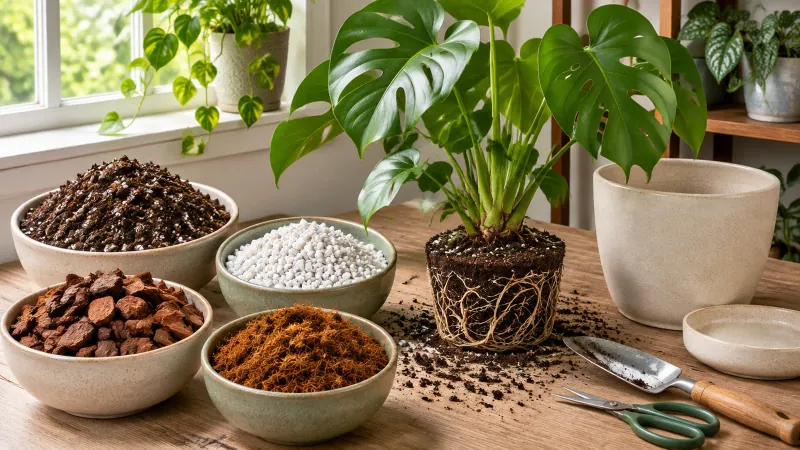
Use a chunky, well-draining mix: standard potting soil blended with orchid bark and perlite works well. Choose a pot with drainage holes. Repot every one to two years in spring into a pot one or two inches wider. See our guide to how to repot a plant.
Humidity, temperature and feeding
| Need | Details |
|---|---|
| Temperature | 65–85°F; protect from cold drafts and heat vents |
| Humidity | Average home humidity is fine; higher humidity helps new leaves unfurl |
| Fertilizer | Balanced fertilizer every 2–4 weeks in spring and summer |
| Cleaning | Wipe big leaves regularly to remove dust |
Support and training
In nature, monsteras climb trees, anchoring with aerial roots. Giving a moss pole, coir pole or trellis lets them climb, producing larger leaves with more splits. Tie stems loosely to the support and tuck aerial roots into the pole or guide them into the soil. Without support, the plant sprawls.
Pruning
Prune to control size or shape.
- Use clean, sharp pruners, wiped with rubbing alcohol.
- Cut just above a node, where a leaf meets the stem.
- Remove yellow or damaged leaves at the base.
- Cut back leggy stems to encourage branching.
- Wear gloves, since sap can irritate skin.
Aerial roots can be trimmed if they are untidy, though they are healthy.
Propagation
Cut a stem with at least one node and an aerial root nub, and place it in water or moist potting mix in bright, indirect light. Roots form in a few weeks. A node with no leaf can root, but needs the node to be included. Pot cuttings once roots are a couple of inches long.
Why isn’t my monstera splitting?
| Cause | Fix |
|---|---|
| Young plant | Be patient; splits appear as it matures |
| Low light | Move to brighter light |
| No support | Add a moss pole |
| Low feeding | Fertilize regularly in the growing season |
| Pot too large or too small | Repot into the right size |
Common problems
| Problem | Likely cause | Fix |
|---|---|---|
| Yellow leaves | Overwatering | Let soil dry; check drainage |
| Brown edges | Dry air, underwatering | Water thoroughly; raise humidity |
| Brown spots | Sun scorch or fungus | Move from direct sun; improve airflow |
| Drooping | Thirst or root problems | Check soil and roots |
| Leggy growth | Low light | Brighter light |
| Pests (spider mites, thrips, scale) | Dry air | See houseplant pests |
Monstera and pets
The ASPCA lists Monstera deliciosa as toxic to dogs and cats. Chewing can cause oral irritation, drooling, vomiting and difficulty swallowing. Place it where pets can’t reach it, or choose a pet-safe plant; see our list of pet-safe house plants. Call your vet or a pet poison hotline if your pet has eaten any.
Quick care calendar
| Season | Tasks |
|---|---|
| Spring | Repot, prune, add support, begin feeding |
| Summer | Water regularly; filter hot sun |
| Fall | Taper feeding |
| Winter | Water less; keep warm and bright |
Space and size
A healthy monstera may reach 6 feet or more indoors and spread wide. Give it room, and consider our list of large indoor plants if you’re planning a statement plant.
Monstera varieties
| Variety | Look | Notes |
|---|---|---|
| Monstera deliciosa | Large leaves with deep splits | The classic; fast and big |
| Monstera adansonii | Smaller leaves with oval holes | Vining; good for baskets |
| Monstera ‘Thai Constellation’ and ‘Albo’ | Cream or white variegation | Slower; need bright light; costly and fragile |
| Monstera obliqua | Very thin, mostly holes | Rare and demanding |
| Monstera standleyana | Narrow leaves with cream edges | Easier; less hole formation |
Variegated forms lose their color in low light and can scorch in direct sun, so give them bright, indirect light.
Aerial roots
The brown, root-like stems that grow from the nodes are aerial roots. In the wild they anchor the plant and gather moisture. Indoors, guide them into the pole or the soil, or trim them if they are untidy. Cutting aerial roots won’t harm the plant, but cut them cleanly rather than ripping them.
How to repot a monstera
Repot in spring when roots crowd the pot. Choose a pot one or two inches wider, use a chunky mix, and set the stake or moss pole in place when repotting so you don’t damage roots later. Water thoroughly, and keep the plant out of strong sun for a week. Don’t fertilize for a month.
Cleaning the leaves
Large leaves collect dust that blocks light. Wipe them with a damp cloth every few weeks, supporting the leaf underneath. Avoid commercial leaf-shine products, which can clog the surface. A shower rinse once in a while also helps and discourages pests.
Frequently asked questions
How much light does a monstera need?
Monsteras grow best in bright, indirect light, such as a few feet from an east- or west-facing window. They tolerate medium light, but leaves stay smaller and develop fewer splits (fenestrations). Strong direct sun can scorch leaves, so filter it with a curtain. If your plant grows long stems with small leaves, it needs more light.
Why does my monstera have no holes in its leaves?
Young monsteras make solid leaves, and splits develop as the plant matures. Lack of holes in an older plant usually means too little light, a lack of support to climb or small size. Provide bright indirect light, a moss pole and regular feeding, and new leaves should become larger and more split over time.
How often should I water a monstera?
Water when the top two inches of soil are dry, usually about once a week in spring and summer and every two weeks or so in winter. Water thoroughly until it drains. Yellow leaves and soggy soil mean overwatering, while curling, drooping leaves and dry soil mean the plant is thirsty.
Do monsteras need a moss pole?
They don’t need one to survive, but support helps them grow bigger leaves with more splits, because in nature they climb trees. A moss pole, trellis or stake gives aerial roots something to grip and keeps the plant tidy. Without support, stems sprawl and may flop under their own weight.
Is monstera toxic to pets?
Yes. The ASPCA lists Monstera deliciosa (split-leaf philodendron) as toxic to cats and dogs, because of insoluble calcium oxalate crystals that cause mouth irritation, drooling and vomiting if chewed. Keep it out of reach, or choose a pet-safe plant, and call your vet if your pet has eaten any.