How to Grow Hydroponic Lettuce
On this page
To grow hydroponic lettuce, start seeds in rockwool or a similar plug, move seedlings into a Kratky jar, deep water culture bucket or NFT channel, keep the nutrient solution cool at roughly pH 5.5 to 6.5, give 12 to 16 hours of light and harvest in about four to six weeks. Heat causes most problems.
Why lettuce suits hydroponics
Lettuce has shallow roots, grows quickly and needs less light than tomatoes or peppers. It is clean, since there’s no soil, and can be harvested continuously. If you are new to hydroponics, lettuce is one of the best crops to start with. For more guides, visit our hydroponics hub, and our guide to hydroponics for beginners explains the basics.
Best lettuce varieties
| Type | Examples | Notes |
|---|---|---|
| Butterhead | ‘Buttercrunch’, ‘Bibb’ | Soft, tender; popular in DWC |
| Loose-leaf | ‘Black Seeded Simpson’, ‘Salad Bowl’, red leaf | Fast; cut-and-come-again |
| Romaine | ‘Little Gem’, ‘Parris Island’ | Crisp; needs a bit more light |
| Oakleaf | ‘Oakleaf’ types | Mild flavor; heat tolerant |
| Heat-tolerant types | ‘Muir’, ‘Jericho’ | Slower to bolt |
Loose-leaf and butterhead are the easiest for beginners. Choose varieties bred for heat if your space is warm.
Choose a system
| System | Why it suits lettuce |
|---|---|
| Kratky (passive) | No pump; simple for a few heads. See our guide to the Kratky method |
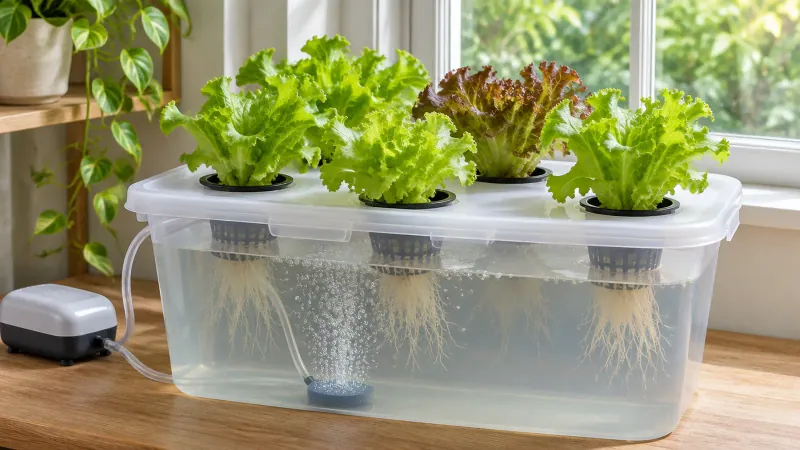
| Deep water culture (DWC) | Roots in aerated water; fast growth |
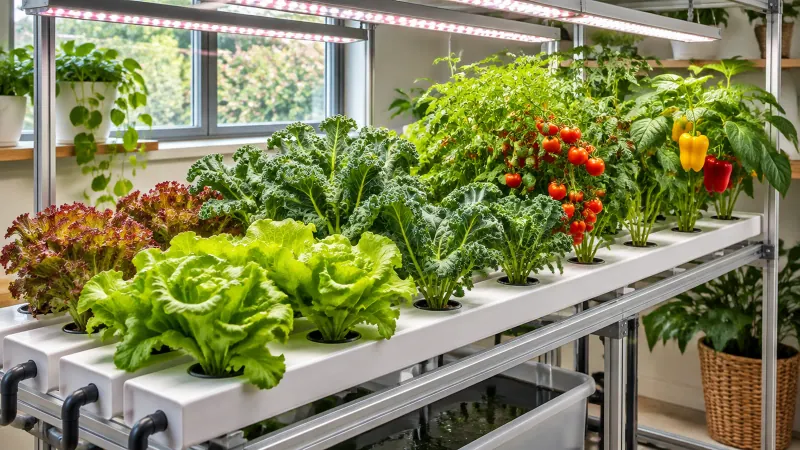
| NFT (nutrient film) | Channels for many heads; efficient |
| Ebb and flow | Flexible; works for mixed crops |
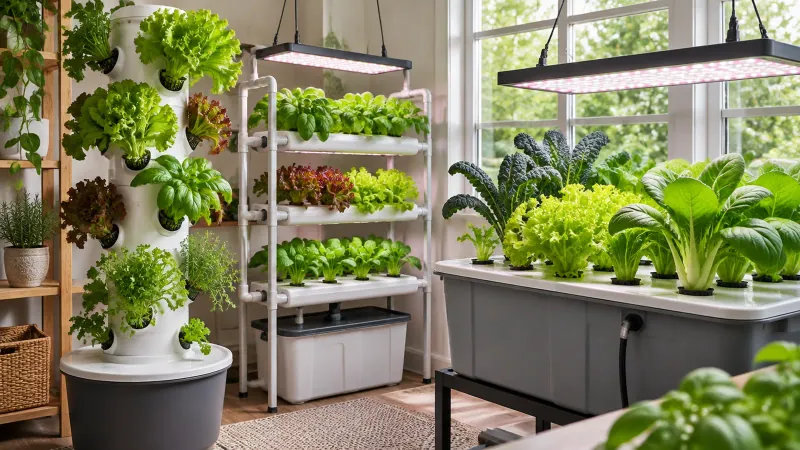
| Vertical towers | Space-saving |
For a comparison, see our guide to types of hydroponic systems.
What you need
- A system (container, channels or tower) that blocks light from the reservoir.
- Net pots and a growing medium such as rockwool, coco coir or clay pebbles.
- Lettuce seeds.
- A hydroponic nutrient made for leafy greens; see our guide to hydroponic nutrients.
- A pH test kit or meter, and an EC or TDS meter.
- A full-spectrum LED grow light and a timer.
- An air pump and air stone for DWC.
How to grow hydroponic lettuce
- Soak rockwool plugs in pH-adjusted water (around 5.5 to 6).
- Sow 1 to 2 seeds per plug, barely covered, and keep warm and moist.
- Provide light as soon as seeds sprout: 12 to 16 hours a day.
- Transplant into net pots in the system when seedlings have a few true leaves and roots show.
- Fill the reservoir with water and nutrients at the strength on the label. Check pH.
- Run the system: air stone on for DWC; pump on a timer for NFT or ebb and flow.
- Top up and change the solution: check weekly, top up with plain water as plants drink, and replace the solution every one to two weeks.
- Harvest when heads or leaves are full-sized.
Nutrients, pH and EC
| Factor | Target for lettuce |
|---|---|
| pH | 5.5–6.5 |
| EC | About 0.8–1.5 mS/cm; follow your nutrient label |
| Water temperature | 60–70°F, lower is better |
| Dissolved oxygen | Keep aerated; air stone running |
| Solution change | Every 1–2 weeks |
Lettuce needs less nutrient than fruiting plants, and strong solutions can cause tipburn. Check pH daily at first and then weekly. Our guide to pH and EC for hydroponics explains the numbers.
Light and temperature
Lettuce needs 12 to 16 hours of light, though not extremely strong. Keep the LED at the recommended distance, and use a timer. Air temperature of 60 to 70°F suits lettuce best. Warm rooms and warm water cause bolting, bitter leaves and root disease.
Harvesting
- Leaf lettuce: cut outer leaves 1 inch above the crown and the plant keeps producing.
- Heads: cut the whole plant at the base, or pull it with its roots.
- Baby leaves: harvest at 3 weeks.
- Harvest in the morning, and rinse and dry leaves before storing.
Common problems
| Problem | Cause | Fix |
|---|---|---|
| Tipburn (brown leaf edges) | Calcium shortage, high EC, low airflow | Lower EC, add a fan, steady growth |
| Bolting and bitter leaves | Heat, long days | Cool water; harvest earlier; heat-tolerant varieties |
| Slimy or brown roots | Root rot (pythium), warm water | Cool the reservoir; improve aeration; clean system |
| Yellow leaves | Nutrient imbalance or low pH | Test and adjust |
| Algae | Light in the reservoir | Block light |
| Leggy seedlings | Weak light | Move lights closer |
| Slow growth | Low light, low nutrients | Check light and EC |
Keeping the system clean
Clean and sanitize the reservoir and parts between crops with a mild hydrogen peroxide or diluted bleach solution, rinsed well. Keep the reservoir opaque and covered, and remove dead leaves promptly.
Pets
Lettuce is not on the ASPCA list, so use ordinary caution. Check the ASPCA list for any other plants you grow near animals, and keep pumps, cords and nutrient solutions out of reach.
Seed starting tips
Lettuce seed germinates best in cool conditions, roughly 60 to 70°F, and very warm temperatures can stop germination. Light helps many varieties sprout, so barely cover the seed. Keep plugs moist but not soaked. Seedlings usually emerge in two to five days. Thin to one seedling per plug, cutting the extras at the base rather than pulling them.
Spacing and succession planting
| Type | Spacing in the system |
|---|---|
| Baby leaf | 3–4 inches |
| Loose-leaf | 6 inches |
| Butterhead and romaine heads | 8–10 inches |
For a continuous supply, plant a few new seedlings every one to two weeks rather than all at once. As you harvest one head, replace it with a seedling from your starter tray. A system with several stages of lettuce, from seedling to harvest, gives a steady supply of salads.
Storing and using your harvest
Harvest in the morning, rinse in cool water, spin or pat dry and store in a container with a paper towel in the fridge. Hydroponic lettuce comes with little grit, but it is still best to wash it. With roots attached, a whole head stays fresh longer when kept in a cool place.
Other hydroponic crops to try next
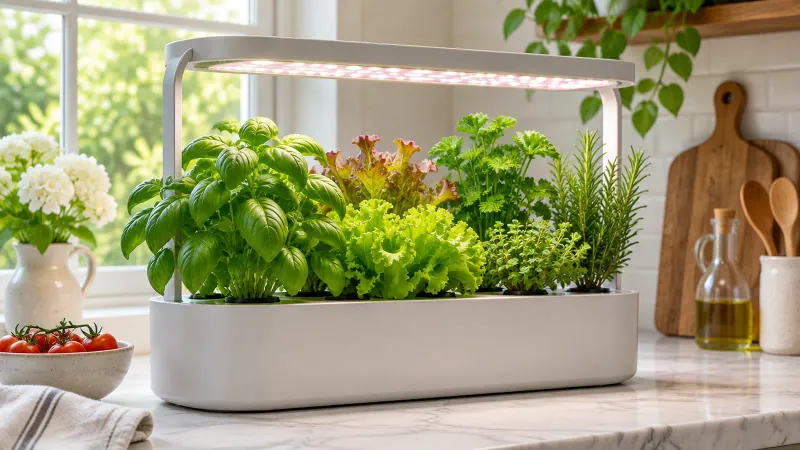
Once lettuce is working, try herbs, which grow in the same conditions. See our guide to the best indoor hydroponic garden for ready-made options.
Frequently asked questions
Is lettuce easy to grow hydroponically?
Yes, lettuce is one of the easiest and most popular hydroponic crops. It grows fast, has shallow roots, needs relatively little light and nutrients, and can be harvested in about four to six weeks. Simple systems such as Kratky jars, deep water culture and NFT channels all suit it. The main challenge is keeping water cool.
What pH and nutrient strength does hydroponic lettuce need?
Aim for a nutrient solution pH of about 5.5 to 6.5. Lettuce likes a fairly mild solution, often an EC around 0.8 to 1.5 mS/cm, but follow your nutrient label, since products differ. Check pH and EC regularly, and adjust gradually. See your nutrient manufacturer’s guidance for the exact strength.
How long does hydroponic lettuce take to grow?
Most lettuce is ready for harvest about 4 to 6 weeks after sprouting, with baby leaves possible in 3 weeks. Leaf and loose-head types grow faster than full heads. Warm water, strong light and steady nutrients speed growth, while heat and low light slow it down and can cause bolting.
What is the best light for hydroponic lettuce?
Lettuce grows well under a full-spectrum LED grow light, on for 12 to 16 hours a day, placed at the distance the manufacturer recommends. It needs less light than fruiting crops. A bright window can work in good light but often gives leggy plants, so artificial light is more reliable, especially in winter.
Why is my hydroponic lettuce bitter or bolting?
Heat is the main cause. Water above about 75°F, hot air and long days push lettuce to bolt and turn bitter. Keep the reservoir cool, harvest on time, choose heat-tolerant varieties and shade it from hot light. Bolting plants should be harvested right away or replaced with fresh seedlings.