Momotaro Tomato Plant: Growing Japan's Favorite Pink Tomato
On this page
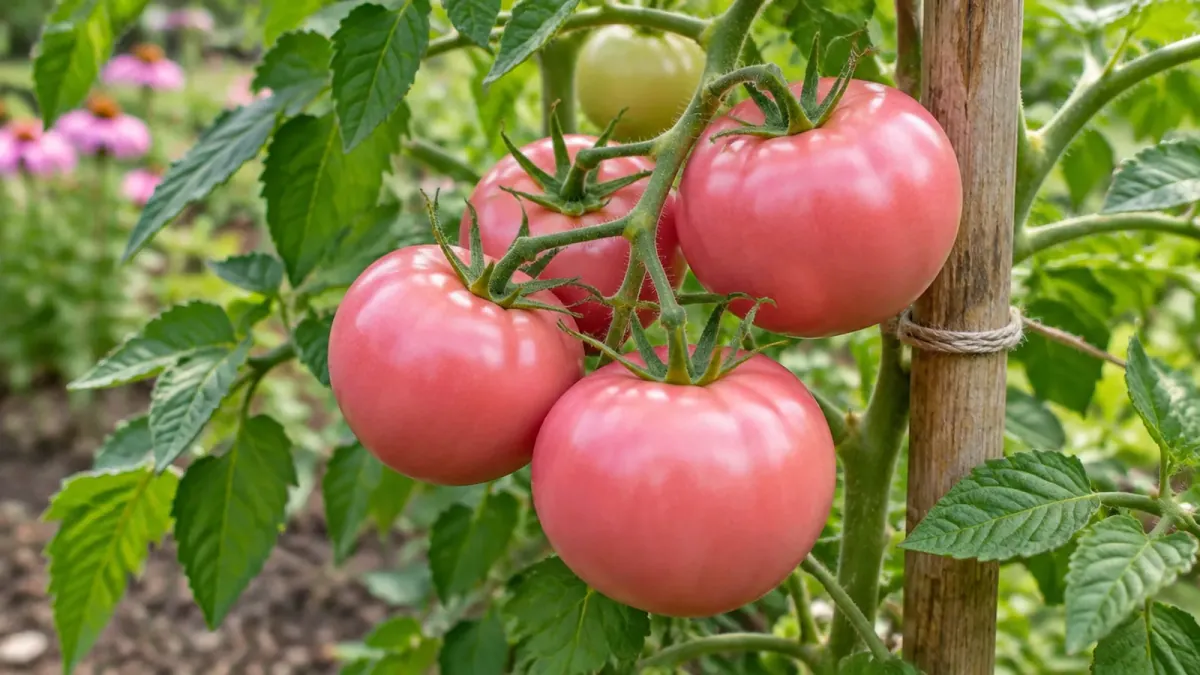
The Momotaro tomato plant is an indeterminate Japanese hybrid that produces round, glossy pink tomatoes prized for their sweet, well-balanced flavor. Grow it like other tall tomatoes: in full sun, with a stake or tall cage, steady watering and regular feeding once fruit sets. Expect medium-sized fruit, often around 5 to 7 ounces, starting roughly 70 to 75 days after transplanting.
What is a Momotaro tomato?
Momotaro is a pink-fruited hybrid tomato from Japan, where it became one of the best-known and most widely grown tomatoes. It was bred to be picked fully ripe, with firm flesh that holds up to handling, rather than harvested green and ripened in storage. That ripe-on-the-vine quality, combined with a sweet, balanced flavor, made it a favorite with Japanese shoppers and gardeners.
The name comes from a Japanese folk tale. Momotarō, or “Peach Boy”, is a hero found inside a giant peach, and “momo” means peach. The rosy color of the fruit suits the name.
Momotaro is now a family of related hybrids rather than a single variety, so you may see several selections sold under the name. For more tomato varieties and growing guides, visit our tomato plants hub.
Why Momotaro tomatoes are pink
Pink tomatoes have red flesh under a clear skin. Most red tomatoes have a yellow-tinted skin, which combines with the red flesh to look bright red. Without that yellow layer, Momotaro’s red flesh shows through as a softer, rosy pink. The color is natural and means nothing about ripeness; ripe Momotaro fruit is evenly pink all over.
Momotaro flavor and uses
Momotaro is grown mainly for eating fresh. The flavor is sweet with enough acidity to taste rich rather than bland, and the flesh is firm and juicy. It is excellent sliced with a little salt, in salads and sandwiches, and on its own as a snack.
It isn’t a paste tomato, so it makes a looser sauce than meaty types. For sauce and canning, see our guide to the best paste tomato varieties.
Momotaro vs other pink tomatoes
| Feature | Momotaro | Typical pink heirloom (e.g., Brandywine) |
|---|---|---|
| Type | F1 hybrid | Open-pollinated heirloom |
| Fruit size | Medium, about 5–7 oz | Often large, 1 lb or more |
| Shape | Round, uniform | Often irregular and ribbed |
| Leaves | Regular leaf | Often potato leaf |
| Crack and blemish tolerance | Generally good | Often prone to cracking |
| Seed saving | Doesn’t come true | Comes true |
How to grow a Momotaro tomato plant
Starting from seed
Momotaro seed is sold mainly by specialist suppliers of Asian vegetables and some general seed companies. Sow indoors about six to eight weeks before your last frost, ¼ inch deep, and keep the seed-starting mix warm (around 70 to 80°F) until seedlings appear. Give seedlings bright light so they grow sturdy, and harden them off for a week before planting out.
Planting
Plant out once frost has passed and nights stay above about 50°F. Choose a spot with full sun and rich, well-drained soil improved with compost. Bury the stem up to the first set of leaves, because tomatoes root along buried stems.
Spacing depends on how you train the plants. Single-stem plants tied to stakes can go 18 to 24 inches apart; caged or lightly pruned plants need 24 to 36 inches.
Support and pruning
Because Momotaro is indeterminate, it keeps growing all season and needs strong support from the start. A 6- to 8-foot stake, a tall heavy-duty cage or a string trellis all work. Our guide to determinate vs indeterminate tomatoes explains why vining types need more support.
In Japan, Momotaro is commonly grown on a single main stem, with all side shoots removed as they appear. This gives fewer but larger, more even fruits and keeps plants narrow. Home gardeners can also leave two stems for a bigger harvest. Our guide on how to prune tomato plants shows how, and our comparison of tomato cages vs stakes helps you choose a support.
Watering
Water deeply and evenly, aiming for about 1 to 2 inches a week and more in hot weather. Smooth-skinned tomatoes are prone to cracking when dry soil is suddenly soaked, so steady moisture and a layer of mulch matter. Water at the base of the plant, ideally in the morning.
Feeding
Mix compost into the planting area, then feed again once the first fruits set, using a tomato fertilizer that isn’t too high in nitrogen. Our guide to the best fertilizer for tomato plants explains what to use at each stage.
Growing Momotaro in containers
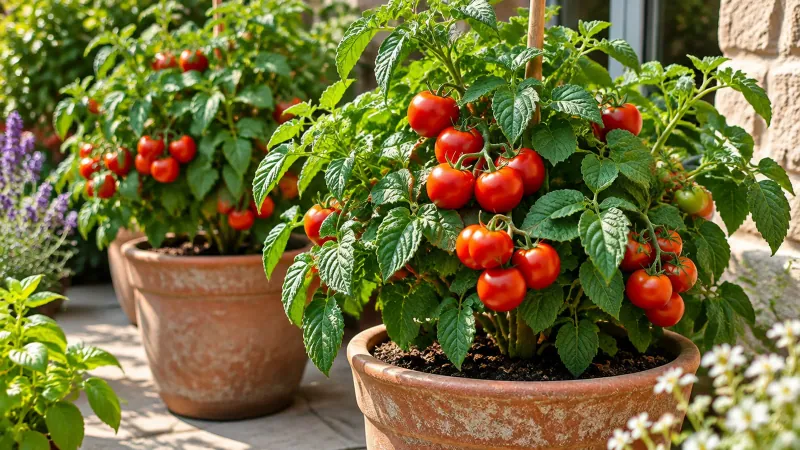
Momotaro grows well in large containers if you give it room and support. Use at least 15 to 20 gallons of quality potting mix, add a tall stake or cage at planting, and water daily in summer. See our guide on how to grow tomatoes in pots for container tips.
Harvesting Momotaro tomatoes
Pick Momotaro when the fruit is evenly pink all over and gives very slightly when squeezed. Don’t wait for it to turn red; it won’t. Fruit picked at full color has the best flavor. Store ripe tomatoes at room temperature rather than in the fridge.
To get larger fruit, some growers thin each cluster to three or four tomatoes while they are small.
Common problems
- Cracking: usually caused by heavy rain or watering after a dry spell. Keep moisture even and mulch well.
- Blossom drop: flowers may fall without setting fruit in very hot weather or on cold nights. Fruit set usually resumes when temperatures moderate.
- Leaf diseases: remove yellowing, spotted lower leaves promptly, avoid wetting foliage, and give plants good airflow.
- Pale fruit color in extreme heat: very high temperatures can interfere with color development. Some afternoon shade in the hottest climates can help.
Is Momotaro worth growing?
If you enjoy fresh slicing tomatoes with a sweet, balanced flavor and an unusual rosy color, Momotaro is well worth a place in the garden. It needs the same care as any tall tomato: strong support, steady watering and regular feeding. The main drawbacks are that seed can be harder to find than for common varieties and, as a hybrid, it won’t come true from saved seed.
Frequently asked questions
Is the Momotaro tomato determinate or indeterminate?
Momotaro is an indeterminate tomato. The vines keep growing and producing new clusters of fruit until frost, so plants become tall and need a sturdy stake, tall cage or trellis. In Japan, plants are commonly trained to a single main stem with side shoots removed, which keeps them tidy and helps each fruit size up. Check the seed packet, as several Momotaro selections exist.
Why is the Momotaro tomato pink?
Pink tomatoes like Momotaro have red flesh but a clear, colorless skin. Most red tomatoes have a yellow-tinted skin over red flesh, which together look bright red. Without the yellow skin pigment, the same red flesh shows through as a softer rosy pink. It is a natural color trait, not a sign that the fruit is underripe.
How big do Momotaro tomatoes get?
Momotaro produces medium-sized, round fruits, often in the range of about 5 to 7 ounces, with smooth, glossy pink skin. Size varies with growing conditions, pruning and how many fruits each cluster carries. Thinning clusters to a few fruits each, and keeping water and feeding steady, helps produce larger, more even tomatoes.
Can you save seeds from Momotaro tomatoes?
You can, but they won’t grow true to type. Momotaro is an F1 hybrid, so seeds saved from its fruit produce plants that vary in size, color, flavor and vigor. For reliable Momotaro plants, buy fresh seed each year. If you want to save seed, grow an open-pollinated pink variety alongside it.
What does Momotaro mean?
Momotaro, often translated as ‘Peach Boy’, is the hero of a famous Japanese folk tale about a boy who was found inside a giant peach. ‘Momo’ means peach in Japanese, a fitting name for a sweet, rosy pink tomato that is especially popular in Japan.