Snake Plant Care: Light, Water and Repotting
On this page
Snake plant care is simple: give it bright to moderate indirect light, water only after the soil dries completely, use a gritty, fast-draining mix, keep it above about 50°F and repot only when it is crowded. The plant tolerates neglect but not soggy soil. It is toxic to cats and dogs, so keep it out of reach.
About snake plants
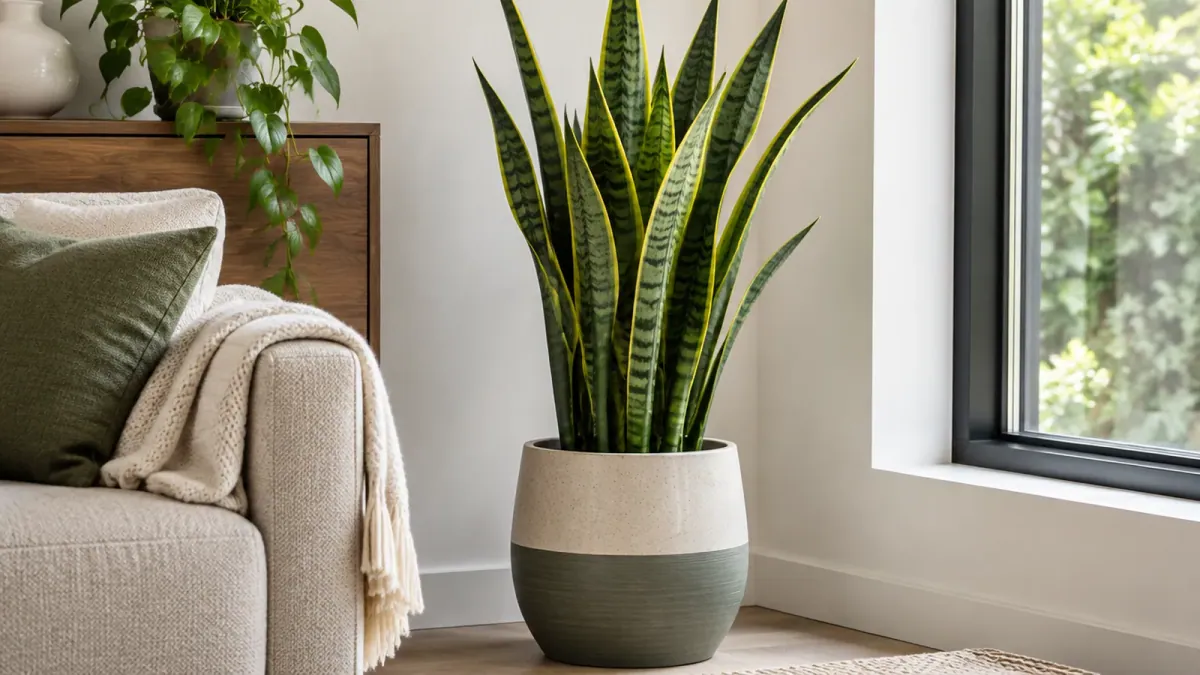
Snake plants (Sansevieria trifasciata, now often listed as Dracaena trifasciata) are tough, upright plants with stiff, sword-shaped leaves. They come from dry regions of West Africa and store water in their leaves and rhizomes. This is why they forgive missed waterings but not wet roots. They are a staple for beginners. For more indoor plant guides, visit our indoor plants hub.
Popular varieties
| Variety | Look | Size |
|---|---|---|
| ‘Laurentii’ | Green leaves with yellow edges | 2–4 ft |
| ‘Black Gold’ | Dark green with gold edges | 2–4 ft |
| Cylindrica | Round, spear-like leaves | 2–4 ft |
| ‘Hahnii’ (bird’s nest) | Short rosettes | 6–8 in |
| ‘Moonshine’ | Silvery pale green | 1–2 ft |
| ‘Futura’ | Compact; broad leaves | 1–2 ft |
Light
Snake plants do best in bright, indirect light, but tolerate low light and some direct morning sun. Strong, hot afternoon sun through glass can scorch leaves, particularly if the plant was in dim light first. In low light, growth slows and variegation can fade. If your light is poor, a basic grow light helps; see our guide to grow lights for indoor plants.
| Light | Result |
|---|---|
| Bright indirect | Best growth and color |
| Low light | Survives; slow growth |
| Direct sun, acclimated | Fine; may brown if sudden |
| Dark room with no light | Slow decline |
Watering
Overwatering is the main cause of death. The plant stores water, so let the soil dry out completely between waterings.
| Season | Typical schedule |
|---|---|
| Spring and summer | About every 2–3 weeks |
| Fall | About every 3–4 weeks |
| Winter | About every 4–6 weeks |
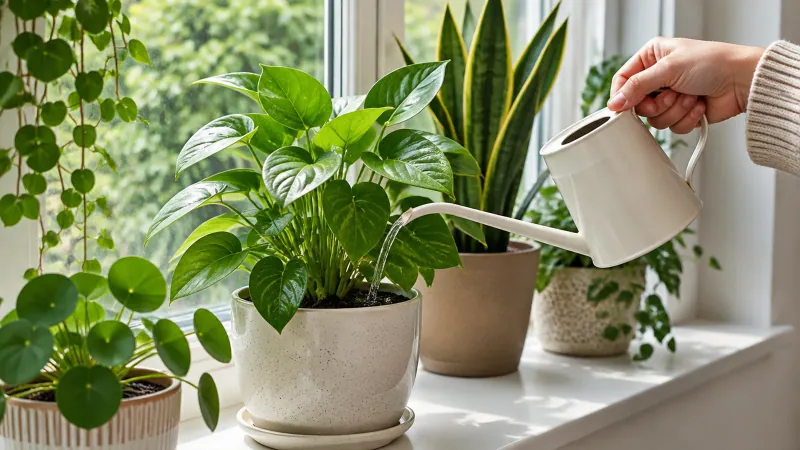
Always check the soil first: push a finger or stick two inches down. Water thoroughly until it drains, then empty the saucer. Use a pot with drainage holes. See our guides to watering schedules for home plants and the signs of overwatering plants.
Soil
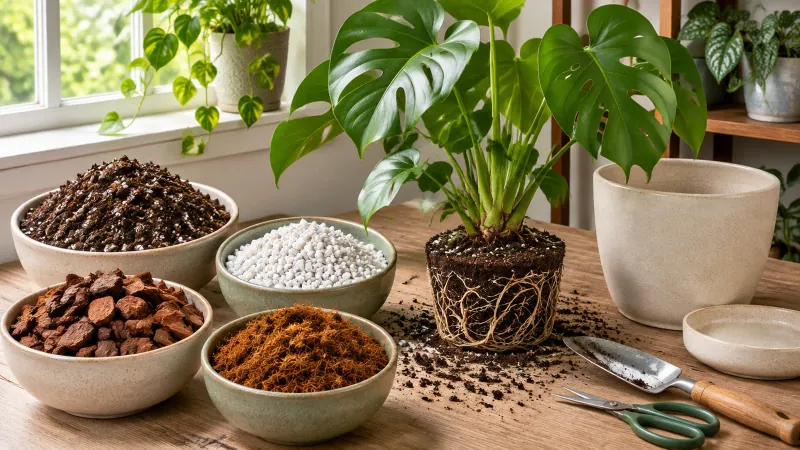
Use a gritty, fast-draining mix, such as cactus or succulent soil, or standard potting mix with extra perlite or coarse sand. Heavy mixes hold too much water.
Temperature and humidity
Snake plants like normal room temperatures of about 60 to 85°F. They don’t like cold: below about 50°F, leaves may be damaged. Keep them away from cold windows and drafts in winter. Normal home humidity is fine, and misting isn’t necessary.
Fertilizer
Feed lightly. Use a balanced houseplant fertilizer at half strength about once a month in spring and summer. Skip feeding in fall and winter.
Repotting
Snake plants like to be snug, so repot rarely, about every three to five years, or when roots crack the pot or push the plant up. Repot in spring into a pot only one size larger, with drainage holes, using a gritty mix. Heavy ceramic pots help stop tall plants tipping. See our guide to how to repot a plant.
Propagation
| Method | How | Notes |
|---|---|---|
| Division | Cut rhizomes into sections with roots and leaves | Fastest; keeps variegation |
| Leaf cuttings in soil | Cut a leaf into 3–4 inch sections; plant the bottom end down | Slow; variegated types may lose their variegation |
| Leaf cuttings in water | Root cut sections in water | Slow; may rot |
Allow cuts to callus for a day before planting.
Common problems
| Problem | Likely cause | Fix |
|---|---|---|
| Mushy, soft leaves | Overwatering and root rot | Remove rotted parts; repot in dry, gritty mix |
| Yellow leaves | Overwatering | Let soil dry; check drainage |
| Brown tips | Underwatering, tap water salts, scorching | Adjust watering; avoid direct hot sun |
| Wrinkled leaves | Underwatering for a long time | Water thoroughly |
| Leaning or floppy | Low light or overwatering | Move to brighter spot; reduce watering |
| Wrinkled cracks in pot | Plant is rootbound | Repot |
| Mealybugs or spider mites | Pests | See houseplant pests |
| Leaves with brown scars | Cold damage | Move to a warmer spot |
Cleaning and grooming
Wipe leaves with a damp cloth every month or two to remove dust, which blocks light. Trim damaged leaves at the base with clean scissors. Avoid leaf shine products, which can clog pores.
Snake plants and pets
The ASPCA lists snake plant (Sansevieria trifasciata) as toxic to dogs and cats. Chewing can cause drooling, vomiting and diarrhea. Keep plants out of reach, or choose a safer option from our list of pet-safe house plants. Call your veterinarian or a pet poison hotline if you think your pet has eaten any.
Is a snake plant right for you?
Snake plants suit people who travel, forget to water or have dim rooms. They are less suitable for homes with plant-chewing pets, for very cold rooms and for anyone who likes to water on a fixed weekly schedule. Check the soil first, every time, and the plant will repay you with years of upright, architectural growth.
Quick care calendar
| Season | Tasks |
|---|---|
| Spring | Repot if needed; start monthly feeding; propagate |
| Summer | Water every few weeks; keep out of harsh midday sun |
| Fall | Reduce watering; stop feeding |
| Winter | Water sparingly; keep warm and away from drafts |
Frequently asked questions
How often should I water a snake plant?
Water only when the soil has dried completely, usually every two to three weeks in spring and summer and every four to six weeks in winter, depending on light, pot and temperature. Check by pushing a finger or stick two inches into the soil. Overwatering is the main cause of death, so when in doubt, wait.
Can snake plants live in low light?
Yes, snake plants tolerate low light better than most houseplants, but they grow slowly there and may lose some leaf pattern. They do best in bright, indirect light and cope with some direct sun if acclimated. A spot a few feet from a window suits most plants. Very dark corners without any natural light are not ideal.
Why are my snake plant’s leaves drooping or mushy?
Mushy, soft or falling leaves usually mean overwatering and root rot, particularly in cool, wet soil. Remove the plant, cut away black or mushy roots and rhizomes, let it dry, and repot in fresh, gritty mix in a pot with drainage. Drooping can also come from cold drafts below about 50°F.
How often does a snake plant need repotting?
Rarely. Snake plants like to be snug in their pots and need repotting only every three to five years, when roots crowd the container or push the plant up. Choose a pot only one size larger, use a gritty cactus mix and repot in spring. A strong plant may even crack a plastic pot.
Are snake plants toxic to pets?
Yes. The ASPCA lists snake plant (Sansevieria trifasciata, now often classified as Dracaena trifasciata) as toxic to cats and dogs, with symptoms such as vomiting, nausea and diarrhea if chewed. Keep it out of reach of pets, or choose a non-toxic alternative. Call your vet if your pet has eaten any.