Pothos Care: How to Grow a Healthy Pothos
On this page
Pothos care is easy: give it bright to moderate indirect light, water when the top inch or two of soil is dry, use a standard well-draining potting mix and trim it regularly to stay full. It tolerates low light and missed waterings but dislikes soggy soil. Pothos is toxic to cats and dogs, so keep it out of reach.
About pothos
Pothos (Epipremnum aureum) is a trailing or climbing vine from Southeast Asia, sold under names such as golden pothos and devil’s ivy. It is a favorite beginner plant because it grows in a wide range of conditions, looks good in hanging baskets or on shelves, and roots easily from cuttings. For more indoor plant guides, visit our indoor plants hub.
Popular pothos varieties
| Variety | Look | Light preference |
|---|---|---|
| Golden pothos | Green leaves with yellow marbling | Medium to bright |
| Marble Queen | Cream and green marbling | Bright indirect (loses variegation in low light) |
| Neon | Bright chartreuse leaves | Medium to bright |
| Jade | Solid dark green | Low to medium |
| Satin pothos (Scindapsus) | Silvery spots on velvety leaves | Medium; different genus |
| Manjula | Wavy leaves with white and green | Bright indirect |
Light
Pothos prefers bright, indirect light but tolerates low light. In low light, leaves become smaller, stems stretch and variegation fades. Direct sun can scorch leaves, particularly through hot, south-facing glass. If your room is dim, a grow light helps; see our guide to grow lights for indoor plants. Other plants for dim rooms are in our low-light lists.
| Light | Result |
|---|---|
| Bright indirect | Fast, full growth; best color |
| Medium | Good growth |
| Low | Slow, leggy growth; less variegation |
| Direct hot sun | Scorched, bleached leaves |
Watering
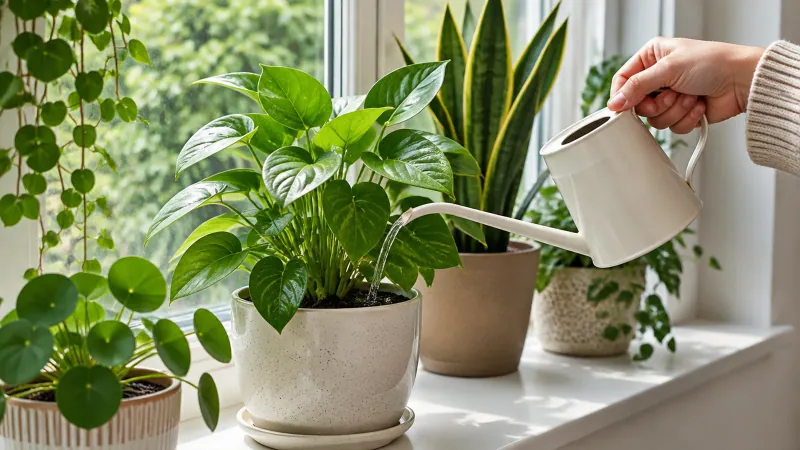
Water when the top one to two inches of soil are dry. Water thoroughly until it drains, and empty the saucer. Pothos recovers well from drooping if underwatered, but overwatering causes root rot. In winter, water less often. See our guide to signs of overwatering plants.
Soil and potting
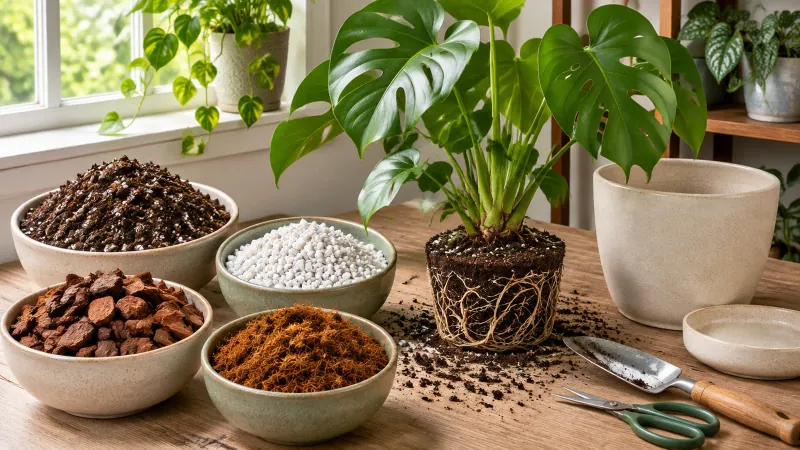
Use a standard, well-draining potting mix, perhaps with a handful of perlite. Pots must have drainage holes. Repot every one to two years in spring, going up one pot size, or sooner if roots crowd the pot. See our guide to how to repot a plant.
Temperature, humidity and feeding
| Need | Details |
|---|---|
| Temperature | Normal room temperature, 65–85°F; protect from cold drafts below 50°F |
| Humidity | Average home humidity is fine; extra humidity helps leaf size |
| Fertilizer | Balanced houseplant fertilizer at half strength, monthly in spring and summer |
| Dust | Wipe leaves occasionally |
Pruning and training
Trim vines above a node to encourage bushy growth and avoid long, bare stems. Pothos can trail from baskets, climb a moss pole or trellis (aerial roots grip) or be trained around a window. Climbing on a pole often gives larger leaves than trailing.
Propagation
Pothos is among the easiest plants to propagate.
- Cut a stem just below a node, leaving a leaf.
- Place in water so the node is submerged, in bright, indirect light, or push into moist soil.
- Wait two to four weeks for roots.
- Pot up when roots are an inch or two long.
- Group several cuttings in one pot for a full plant.
Common problems
| Problem | Likely cause | Fix |
|---|---|---|
| Yellow leaves | Overwatering, poor drainage | Let soil dry; ensure drainage |
| Brown, crispy edges | Underwatering, low humidity, fertilizer salts | Water thoroughly; flush soil |
| Black or mushy stems | Root rot | Cut healthy stems and re-root |
| Leaves lose variegation | Too little light | Move to brighter spot |
| Drooping | Thirst or cold | Check soil; move from drafts |
| Small leaves, long gaps | Low light | Brighter light; prune |
| Pests (mealybugs, spider mites) | Dry air, stress | See houseplant pests |
Pothos and pets
The ASPCA lists pothos as toxic to dogs and cats. Chewing releases insoluble calcium oxalate crystals, causing mouth pain, drooling and vomiting. Hang baskets high, or choose a pet-friendly alternative from our guide to pet-safe house plants. Contact your vet if your pet has eaten any.
Quick care calendar
| Season | Tasks |
|---|---|
| Spring | Repot, prune, begin feeding |
| Summer | Water regularly; protect from hot sun |
| Fall | Reduce feeding |
| Winter | Water sparingly; keep away from cold glass |
Is pothos good for beginners?
Yes. Pothos tolerates a range of light, forgives missed watering and shows clear signs when it needs help.
Pothos, philodendron or something else?
Pothos is often confused with heartleaf philodendron. Pothos leaves are thicker, waxier and usually have a slightly uneven, marbled look, while philodendron leaves are thinner, more heart-shaped and uniformly green. Both are trailing aroids with similar care, and both are on the ASPCA toxic list. Satin pothos (Scindapsus pictus) is a different genus with velvety leaves; it likes a little more humidity and slightly less water.
Making pothos fuller
Long, bare vines happen when plants stretch for light or are never pruned. To thicken a plant, cut vines back to a node, root the cuttings and stick them back in the same pot. New growth then branches at the cut. Rotate the pot every week or two, so all sides get light, and feed lightly in the growing season.
| Goal | What to do |
|---|---|
| Bushier plant | Prune above nodes; plant cuttings back in the pot |
| Bigger leaves | Give a pole to climb; add brighter light and food |
| Longer trails | Hang in a basket; give good light |
| Keep variegation | Brighter indirect light |
| Reduce dust | Wipe leaves monthly |
Pothos in hanging baskets and shelves
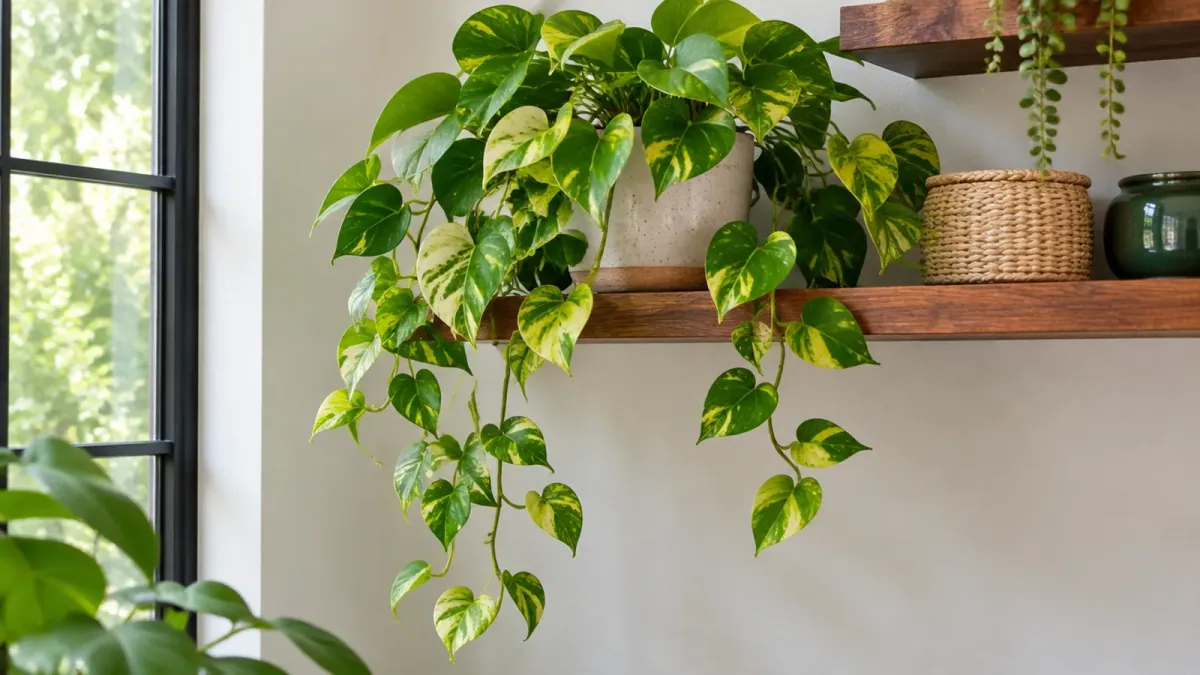
Pothos is one of the best plants for hanging baskets and high shelves, which also keeps it out of reach of pets. For more trailing options, see our list of hanging indoor plants. Use a pot with a drainage saucer, or hang the plant in its nursery pot inside a decorative basket so you can take it down to water.
Frequently asked questions
How often should I water a pothos?
Water when the top one to two inches of soil is dry, which is usually every one to two weeks, depending on light, pot size and season. Pothos tolerate occasional drying better than constant wetness. Droopy leaves that perk up after watering mean it was thirsty, while yellow leaves and soggy soil suggest overwatering.
Can pothos grow in low light?
Yes, pothos is one of the most low-light-tolerant houseplants, but growth slows and variegated types lose much of their pattern and turn greener. For the best color and bushy growth, give bright, indirect light. Keep it out of hot, direct afternoon sun, which can scorch leaves.
Why are my pothos leaves turning yellow?
The usual cause is overwatering or poor drainage. Other causes include too little light, old leaves naturally aging, cold drafts or a nutrient shortage. Check the soil moisture first, make sure the pot drains and let the soil dry slightly between waterings. Remove yellow leaves, and new growth should come in green.
How do I propagate pothos?
Cut a stem just below a node, where a leaf meets the stem, leaving a leaf and the node on the cutting. Put it in a jar of water, or plant it in moist potting mix. Roots usually appear in two to four weeks. Pot several cuttings together for a fuller plant.
Is pothos toxic to cats and dogs?
Yes. The ASPCA lists pothos (Epipremnum aureum), also called devil’s ivy, as toxic to cats and dogs. Chewing can cause mouth irritation, drooling and vomiting because of insoluble calcium oxalate crystals. Hang it out of reach or choose a pet-safe plant, and call your vet if your pet has eaten some.